

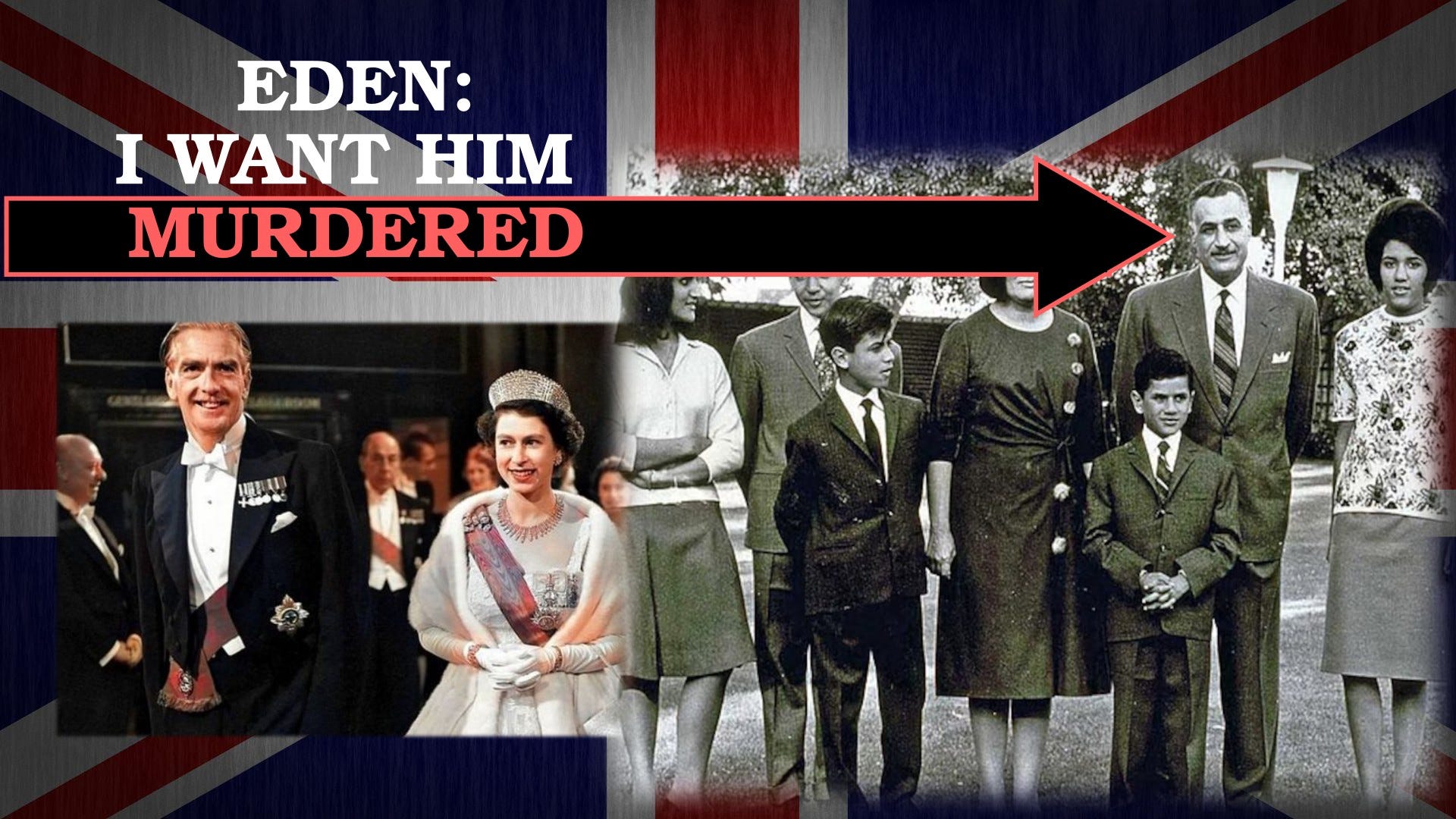
Anthony Eden was a war hero. In 1917 he was awarded the Military Cross. Following a night raid into a German trench, a 20-year-old Eden carried a badly wounded man back across no man’s land under enemy fire. The citation records “conspicuous bravery and devotion to duty.” It was an auspicious start to a career that would see him take on many important roles from Winston Churchill’s foreign secretary in World War II to Prime Minister at the time of the Suez crisis.
An Honourable Man
Eden’s honours included:
- Privy Counsellor (1934) — grants the title “Right Honourable” for life as well as access to the nation’s highest secrets.
- Order of the Garter (1954) — the most exclusive order of chivalry in Britain. It carried the title “Sir.”
- Wateler Peace Prize (1954) — awarded by the Carnegie Foundation for contributions to international peace.
- Earl of Avon and Viscount Eden (1961) — a hereditary peerage, it granted a seat in the House of Lords for life for Eden and for his descendants.
When Eden died in 1977, the British establishment spoke as one:
- Queen Elizabeth II — “an outstanding diplomat and ... a man of courage and integrity.”
- Prime Minister James Callaghan — “A most distinguished man.”
- The House of Commons motion — “Courage, integrity and honour are the highest qualities in human life. Anthony Eden’s place in our national history will be assured.”
A Perfect Hero?
When writing fiction, frequent advice is “don’t make your villains too evil, nor your heroes too perfect.” Amidst the glittering career and establishment praise, there was a detail that does help take the shine off Sir Anthony Eden, who might otherwise come across as too perfect.
In March 1956, Eden, then UK Prime Minister, telephoned his Minister of State at the Foreign Office, Anthony Nutting. Eden was angry about President Nasser of Egypt, who had been increasingly asserting Egyptian independence. Nutting had prepared a memo on “neutralising” Nasser through diplomatic and economic pressure. Eden was not interested.
This is what he said to Nutting [1]:
“What’s all this nonsense about isolating Nasser, or ‘neutralising’ him as you call it? I want him destroyed, can’t you understand? I want him murdered, and if you and the Foreign Office don’t agree, then you’d better come to the cabinet and explain why.”
When Nutting pointed out that there was no obvious alternative to take Nasser’s place, Eden replied:
“I don’t give a damn if there’s anarchy and chaos in Egypt.”
When the British establishment called Eden a man of “courage, integrity and honour”, they chose not to mention that he had called for the murder of a 38 year foreign head of state and father of five children.
Eden was never convicted of any crime, however under s.4 Offences Against the Person Act 1861 — in force in 1956 and still today — soliciting or encouraging murder is a felony carrying life imprisonment.
Eden told a subordinate minister “I want him murdered” - that might just qualify.
[1] Brian Lapping, End of the Empire (London: Granada, 1985), p. 316. Nutting first recorded the line as “I want him removed” in his 1967 memoir, published while Eden was still alive; in later accounts he insisted Eden’s actual word was “murdered.”
More: