

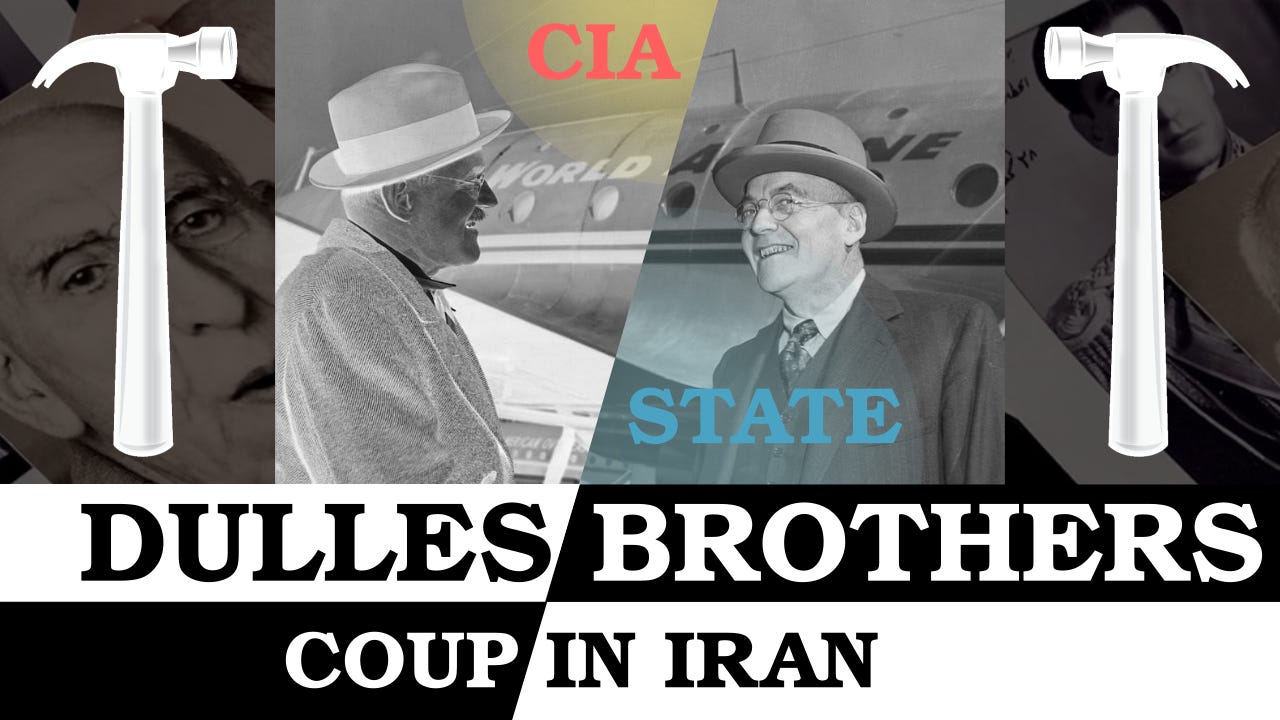
In the early 1950s, two American brothers quietly reshaped the political order of the world. John Foster and Allen Dulles were President Eisenhower’s twin hammers - one striking in public through diplomacy, the other in secret through the CIA.
When Eisenhower took office in 1953, the Dulles brothers gave his administration both its moral compass and its concealed blade. John Foster, as Secretary of State, cast America’s ambitions in righteousnes light, using language suited for the pulpit.
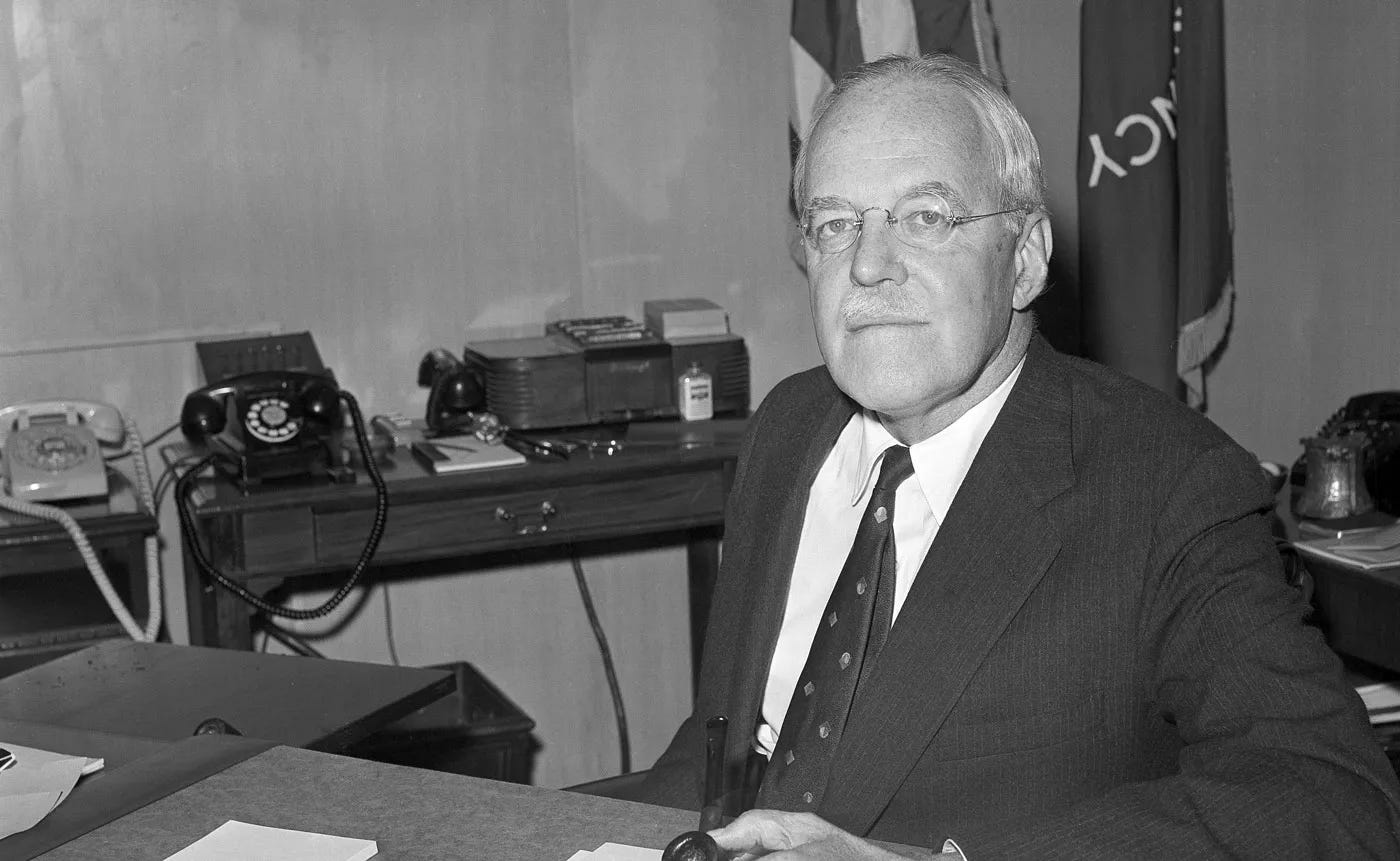
Meanwhile Allen, acting behind the scenes as CIA Director, carried out the unholy, often deadly, work to impose that ambition on the world.
Their first great enterprise - the 1953 coup in Iran - was executed with ruthless efficiency. A way of controlling the destinies of far-off countries had been discovered.
Why did the influence of these two men reach so far? Because perception always bends to suit preconceived attitudes. Each of us sees the world through the lens we are familiar with. Architects see solutions in buildings; doctors, in medicine. Teachers see the power of education. And soldiers like Eisenhower? Their answers revolve around the use of deadly force.
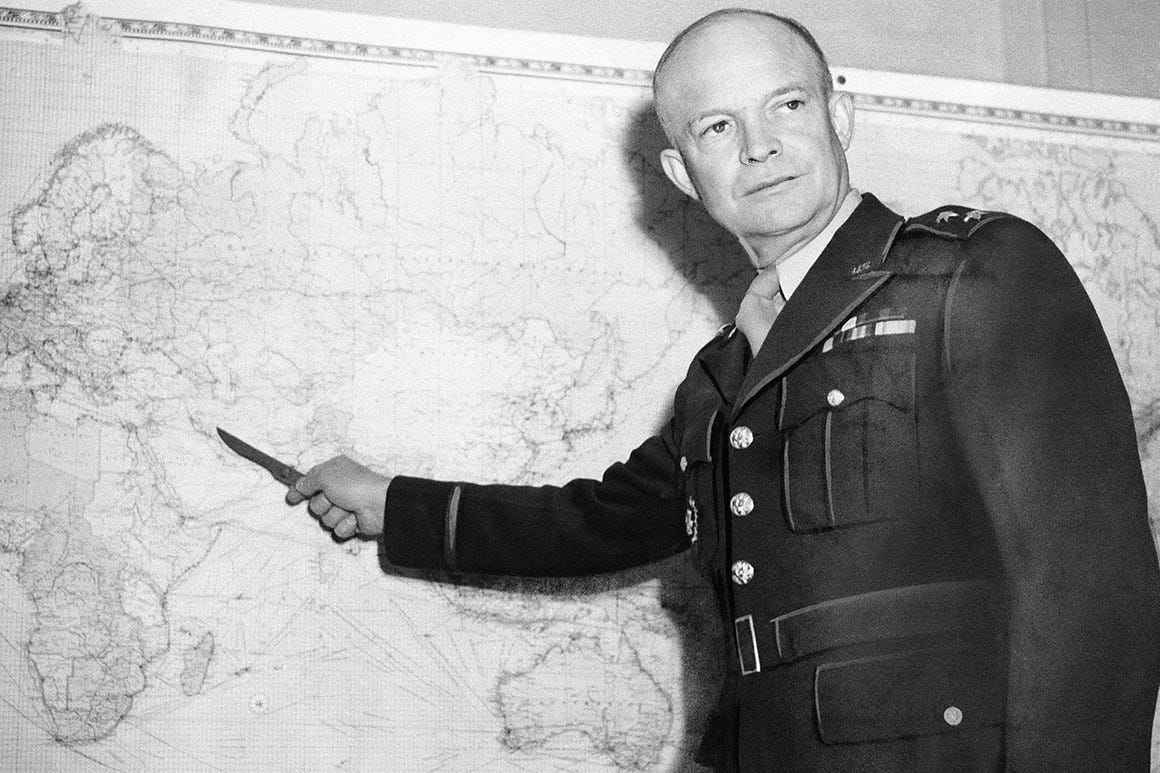
President Eisenhower was the victorious general of World War II. Allen Dulles had spent those years in shadowy intelligence work across Europe. His elder brother Foster had served the interests of international oil and banking giants at Sullivan & Cromwell, the law firm where corporate empire and statecraft blended seamlessly.
As postwar America turned to confront the Soviet Union, the Eisenhower–Dulles alliance forged a new national identity - morally certain, economically predatory, armed to the teeth and skilled at clandestine operations.
If Eisenhower was the figurehead, the Dulles brothers were the brains. Descended from stern Presbyterians - missionaries, ministers, and cabinet members - they saw politics as a struggle between virtue and damnation. Neutrality, collectivism, or anti‑imperialism smelled to them like moral decay.

Theirs was not a reflective faith but a punitive one. Compromise was not prudence; it was a weakness, a sin. So Iran was overthrown. Then Guatemala. Then the Congo, Then Indonesia...on and on.
Each intervention became another nail for the same hammer - the corporate, covert, crusading machine pounding the world into an American likeness - soaking the ground in blood as they proceeded.
By the end, even Eisenhower seemed to sense the monster that had taken shape on his watch. In his famous 1961 farewell address, he warned against “the military‑industrial complex” and “the disastrous rise of misplaced power.” The antidote, he said, would be “an alert and knowledgeable citizenry.”
Sixty‑five years later, as Western bombs again fall on Iran, few believe the justifications offered for the violence - even fewer believe that these wars reflect any democratic will.
Eisenhower’s farewell address still hangs in the air: Did we, the citizenry, remain alert and knowledgeable? The question is rhetorical. Once a nation shapes itself into a hammer, everything begins to look like a nail - and the Western world has been pounding these nails ever since.
It is too much to blame everything on the Dulles brothers, yet difficult to underestimate their impact. They embedded a filter in the Western mind: We are good; others represent an evil that must be stamped out. From that conviction came decades of moral blindness, secrecy and violence.
By 1969 both brothers were gone, but their creed lives on - spread through policy papers and talking heads, sanctified in parliaments and stock markets and enforced by missiles and drones. The consequences have been vast.
And terrible.
See 4 min film: