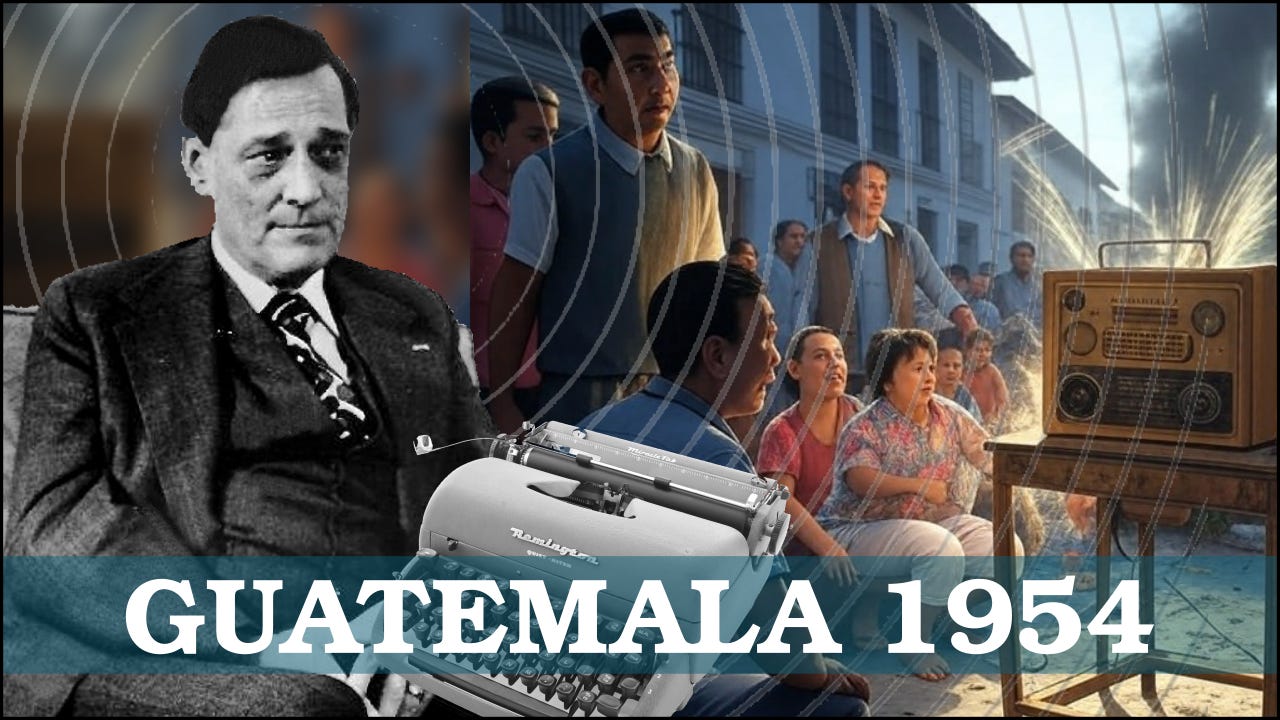
In the spring of 1954, a former actor, playwright and prisoner of war sat down at a typewriter in Honduras and began manufacturing a country’s defeat. His name was David Atlee Phillips. He worked for the CIA. And the war he was about to conjure from words alone would bring down a democratically elected government without a single decisive battle being fought.
Their secret weapon was not soldiers but stories.
We are all, at some level, confirmation bias machines. Each piece of information we absorb shapes how we select and interpret the next — and the next, and the next. In an age of social media and information flood, we feel this acutely: the struggle to distinguish signal from noise, truth from fabrication, news from theatre. But this vulnerability is not new, and it has been understood and exploited for a very long time. In Guatemala in 1954, the CIA ran the first modern experiment in manufactured reality — and it worked with devastating precision.
A corporate grievance over Guatemala’s bananas had been brought to the attention of the Dulles brothers, each with close professional ties to the United Fruit Company — John Foster as its longtime lawyer, Allen as a board member. The brothers, as heads of both the State Department and the CIA, reframed the situation as a communist crisis. President Eisenhower’s administration was persuaded, and authorised a covert operation to remove the elected government of Jacobo Árbenz.
Operation PBSuccess
The coup’s codename was PBSuccess — “PB” being the CIA’s cryptonym for Guatemala. Under CIA Director Allen Dulles, with Frank Wisner and Tracy Barnes directing fieldwork, a small clandestine crew was assembled. Their weapons were not guns but narratives — and the man they needed was not a soldier but a storyteller.
The Gentleman-Spy
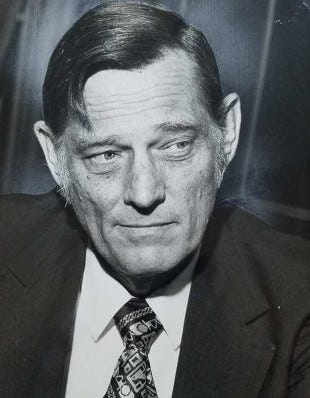
Front and centre stood David Atlee Phillips: former bomber-crewman, actor, playwright, and editor of The South Pacific Mail in Chile. Fluent in Spanish and an instinctive narrator, he understood something that military planners often miss — that people do not respond to reality, but to their perception of reality. Change the perception, and you change everything else.
In 1954 he scripted and voiced La Voz de la Liberación — a fake rebel radio network broadcasting from Honduras. Each bulletin announced imaginary victories, phantom defections, and the imminent fall of Guatemala City. Phillips created an entire war from words. He was a gentleman-spy whose typewriter was more lethal than a pistol.
Beyond radio theatrics, CIA operators sent counterfeit military communications on frequencies they knew Guatemalan officers monitored — dispatch after dispatch describing units deserting or switching sides. CIA-friendly journalists printed stories that the country’s well-equipped 7,000-man army faced a vastly larger force of invading rebels. In reality, America’s chosen proxy, Carlos Castillo Armas, commanded only 600 lightly armed men — a militia that would have been crushed in open battle. But the Guatemalan officers didn’t know that. They knew only what they were hearing. And what they were hearing was the sound of a war they were already losing.
Theatre of War
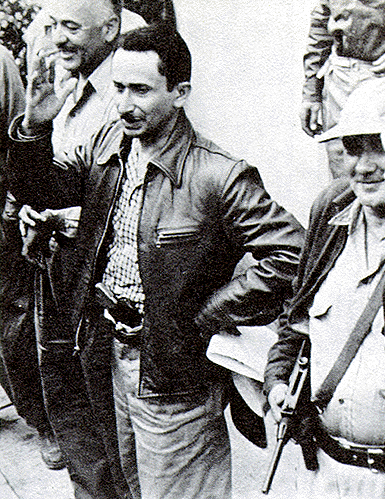
To complete the illusion of apocalypse, a handful of borrowed aircraft of World War II vintage lumbered over Guatemala City dropping a scattering of antiquated bombs. Two or three civilians were killed, yet the psychological effect was immense. CIA-friendly reporters amplified the explosions into a narrative of devastation. Rumours swirled that U.S. Marines were poised to land if Árbenz didn’t surrender.
Each new story confirmed the last. Each report made the next more believable. The Guatemalan army — absorbing broadcast after broadcast, intercept after intercept — became convinced that resistance was hopeless and capitulated. Castillo Armas flew in and took control. The coup wasn’t won on the battlefield. It was won inside people’s heads.
Fallout and Afterlives
What followed was brutal: decades of dictatorship, civil war, and hidden graves. Washington’s “success” planted the seeds of a catastrophe that would cost countless lives. PBSuccess wasn’t just a coup d’état — it was a media simulation of war.
The information flood we navigate today — social media, rolling news, algorithmic echo chambers — is in many ways a vast, anarchic version of what Phillips built in Honduras with a transmitter and a typewriter. The technology has changed. The vulnerability it exploits has not. We are still confirmation bias machines. We still believe what we are primed to believe. And there are still people who know it and use it.
Once Guatemalans stopped believing in their own sovereignty, they lost it. A question always worth asking is: what are we being primed to believe right now?
Postscript
Years later, some of the characters from this story would reappear in other dark corners of American history.
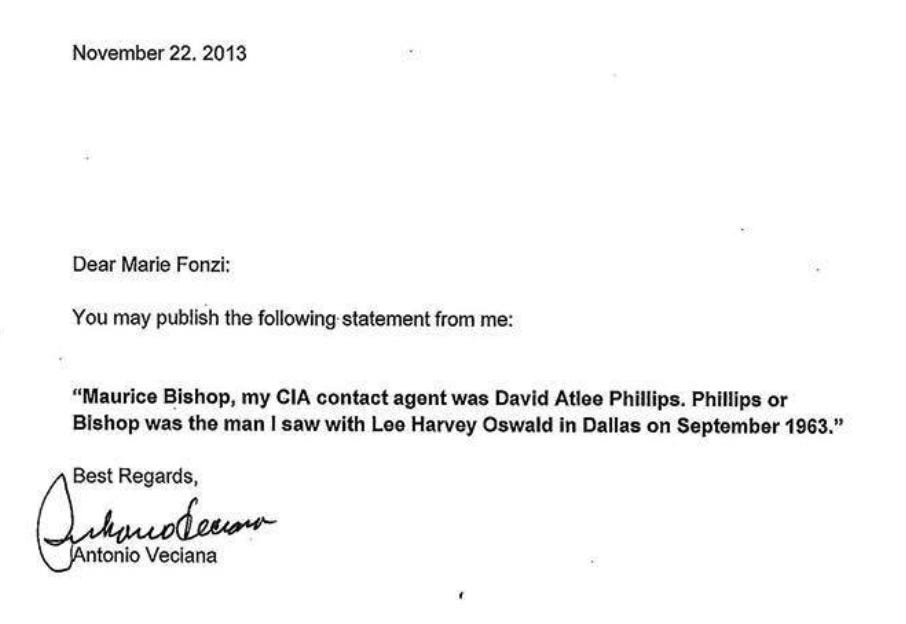
During the 1976 House Select Committee on Assassinations, CIA-sponsored Cuban exile Antonio Veciana testified that he had seen Lee Harvey Oswald — the alleged assassin of President John F. Kennedy — in conversation with his CIA handler — a man he knew as “Maurice Bishop”, He saw this in Dallas in September 1963, two months before the assassination.
The committee’s seasoned investigator, Gaeton Fonzi, became convinced — though could not prove it — that “Maurice Bishop” was an alias for Phillips himself. Later, on the fiftieth anniversary of the assassination, Veciana would confirm in a letter to Fonzi’s widow, that yes, Bishop and Philips were one and the same.
Oh, what a tangled web we weave.