

Imagine a political system that favoured war — because war was profitable, or because of some strange kind of addiction. If such a system existed, what policies would it find useful? Here are some suggestions.
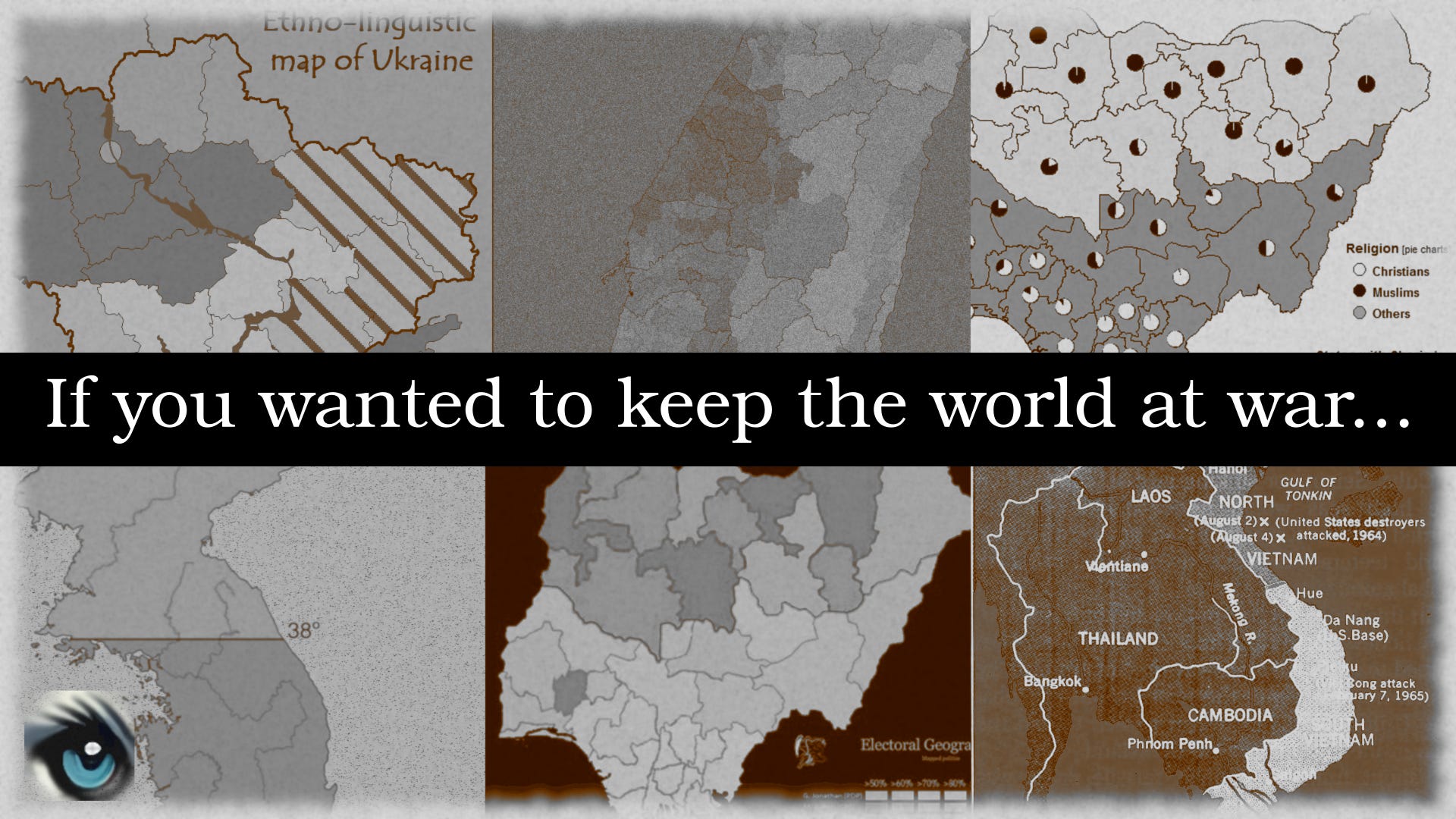
Axiom 1. Borders created by earlier empires are sacred if they promote conflict
A border that cuts through ethnic, religious or linguistic groups is a gift. It keeps the peoples inside it permanently poised for conflict.
Nigeria’s 19th Century Borders
Nigeria’s boundaries were a European invention of the nineteenth century: a predominantly Muslim north was attached to a mostly Christian south.
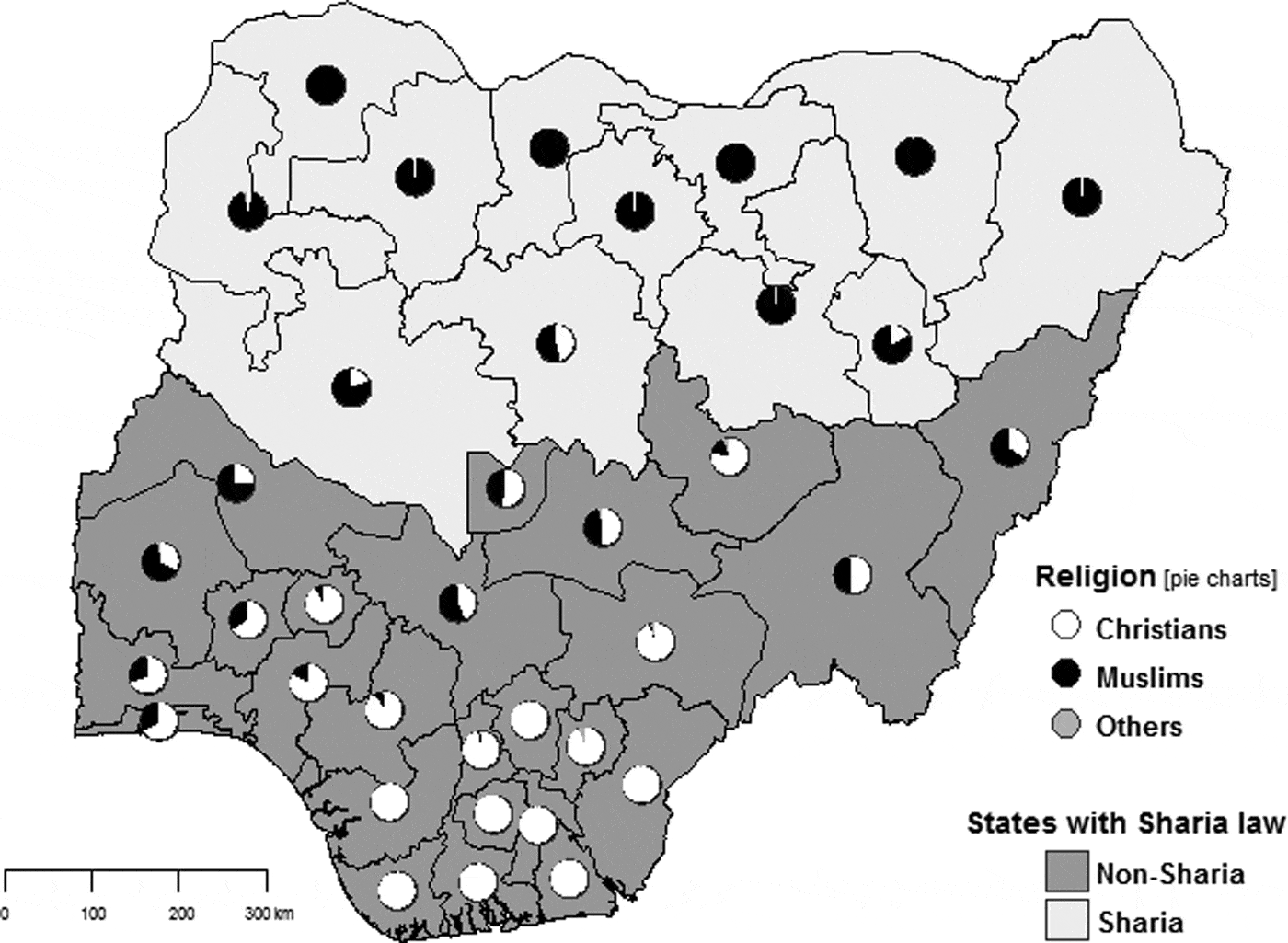
A century of trouble has followed, and persists — Boko Haram, whose name means “Western education is forbidden”, is active in the north, while the government in the south has called in American air-strikes as recently as Christmas Day 2025 [2]. Since the British left their colony, millions of people have been killed as a result of conflict. Some will remember the dreadful scenes of starvation seen in the southern region Biafra, in the early 1970s as it tried to secede from Nigeria. Insisting that peoples of such divergent views live as one has been deadly.
Korea and the 38th Parallel
In 1945 two American colonels divided a nation that had been whole for a millennium. Dean Rusk and Charles Bonesteel were given half an hour in a Pentagon side room, a single National Geographic map, and no Korea experts to consult — the map did not even mark provincial borders. They chose the 38th parallel because it ran just north of Seoul. Rusk later admitted the line “made no sense economically or geographically”.
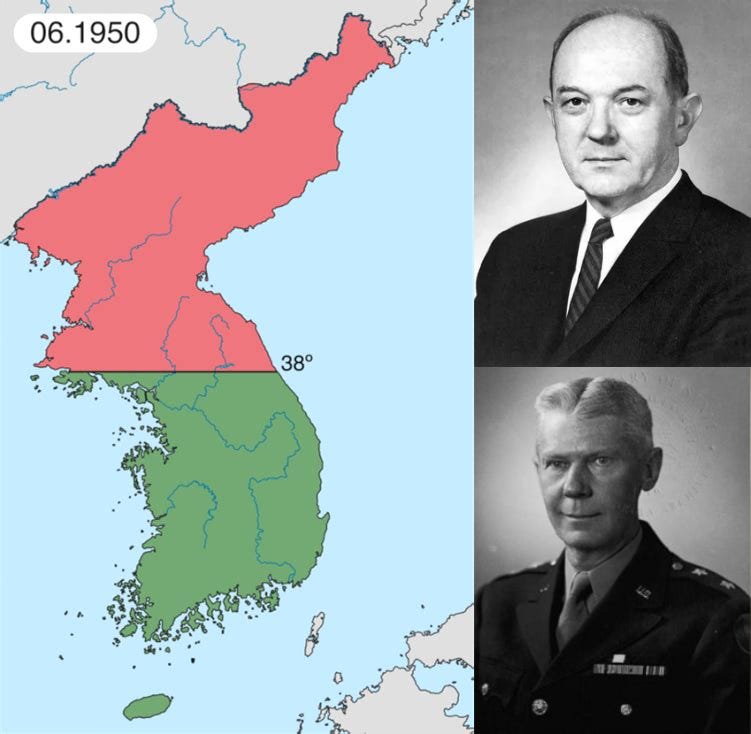
The tension it caused has played out ever since. The three-year war of the early 1950s killed around three million people, including 36,000 United States troops (see also Iran and Korea 1953: How America Split the Regime‑Change Atom). Today the divided country is arguably the most unstable place in the world where nuclear weapons are poised for use. If Korea had not been seen by the USA as a Cold War pawn to be divided in two, perhaps the people would have been able to resolve their differences peacefully.
Ukraine: Europe’s contested border lands
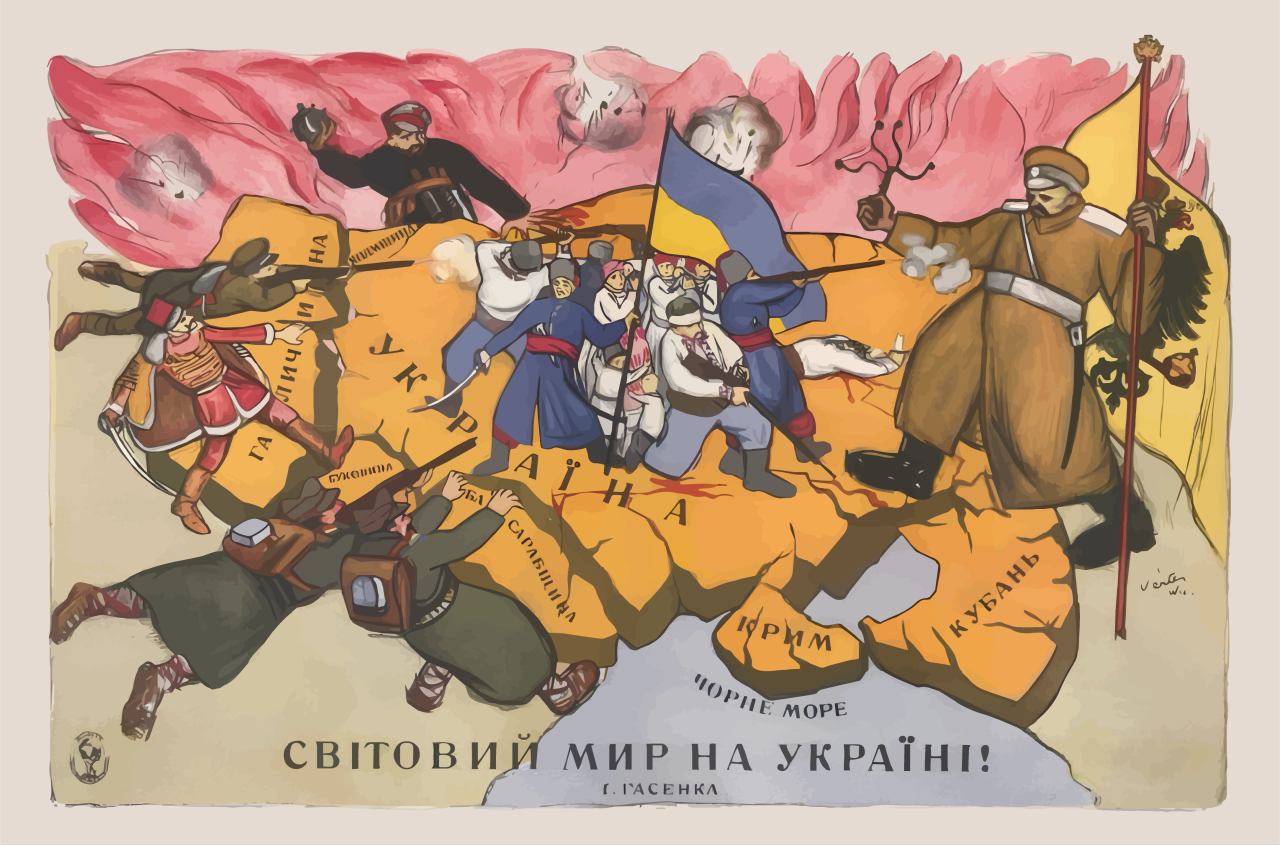
Ukraine’s borders were drawn by Soviet administrators in the decades after the Russian revolution. Prior to the Soviet era, Ukraine was a contested borderland as shown by the 1919 caricature above. It shows a region attacked by Bolsheviks from the North, White Russians from the East and by Poles, Hungarians and Romanians from the West. [3]
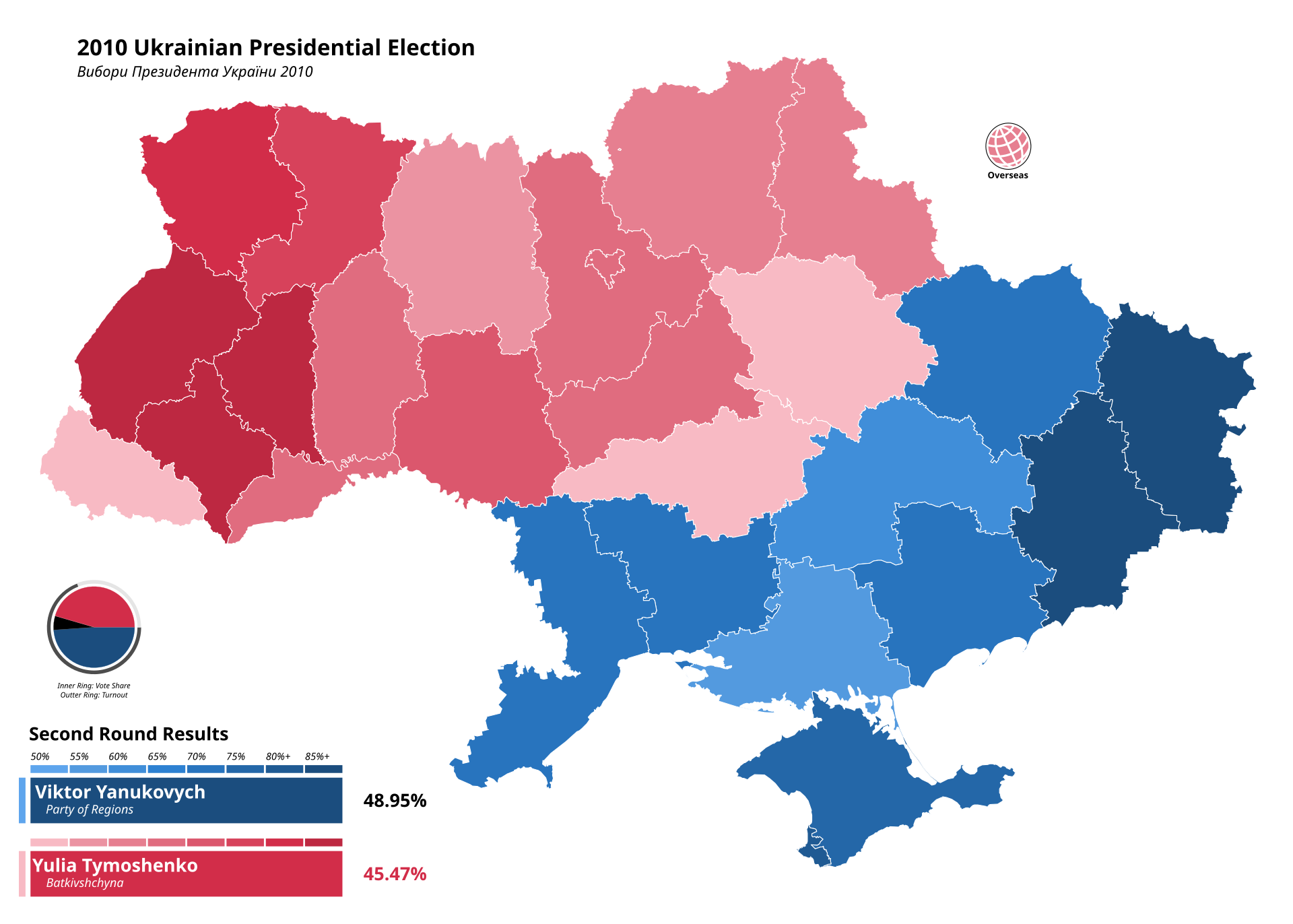
Today’s Ukraine encloses two constituencies, as the 2010 presidential election showed. The Russia-friendly Yanukovych won overall by taking the east and the south, while his rival, Tymoshenko, friend of the EU and the USA, dominated in the west.
The late Senator Lindsey Graham saw Ukraine’s division as an asset. Casting the war as resistance to “Russia’s unprovoked aggression,” he argued that sending money and arms to one of Ukraine’s constituencies was a wonderful way to weaken Russia without losing American lives [4].
The West’s policy to portray Ukraine as a unified nation with sacred boundaries falling victim to Russian aggression has left the country in ruins with countless dead. The policy has been an abject failure and the official approach in the West seems to be to forget history, forget the recent past and blame everything on Putin.
Axiom 2. A community’s historic divisions are gold to be exploited.
Taiwan has been ruled by many hands. The Dutch dominated in the seventeenth century. Later, settlers from the mainland competed with the indigenous peoples. The Japanese held “Formosa” from 1895 to 1945, and then came the Kuomintang, opponents of Mao’s communists, who fled the mainland in 1949. Each era left its mark creating a mosaic of ethnic and linguistic groupings.
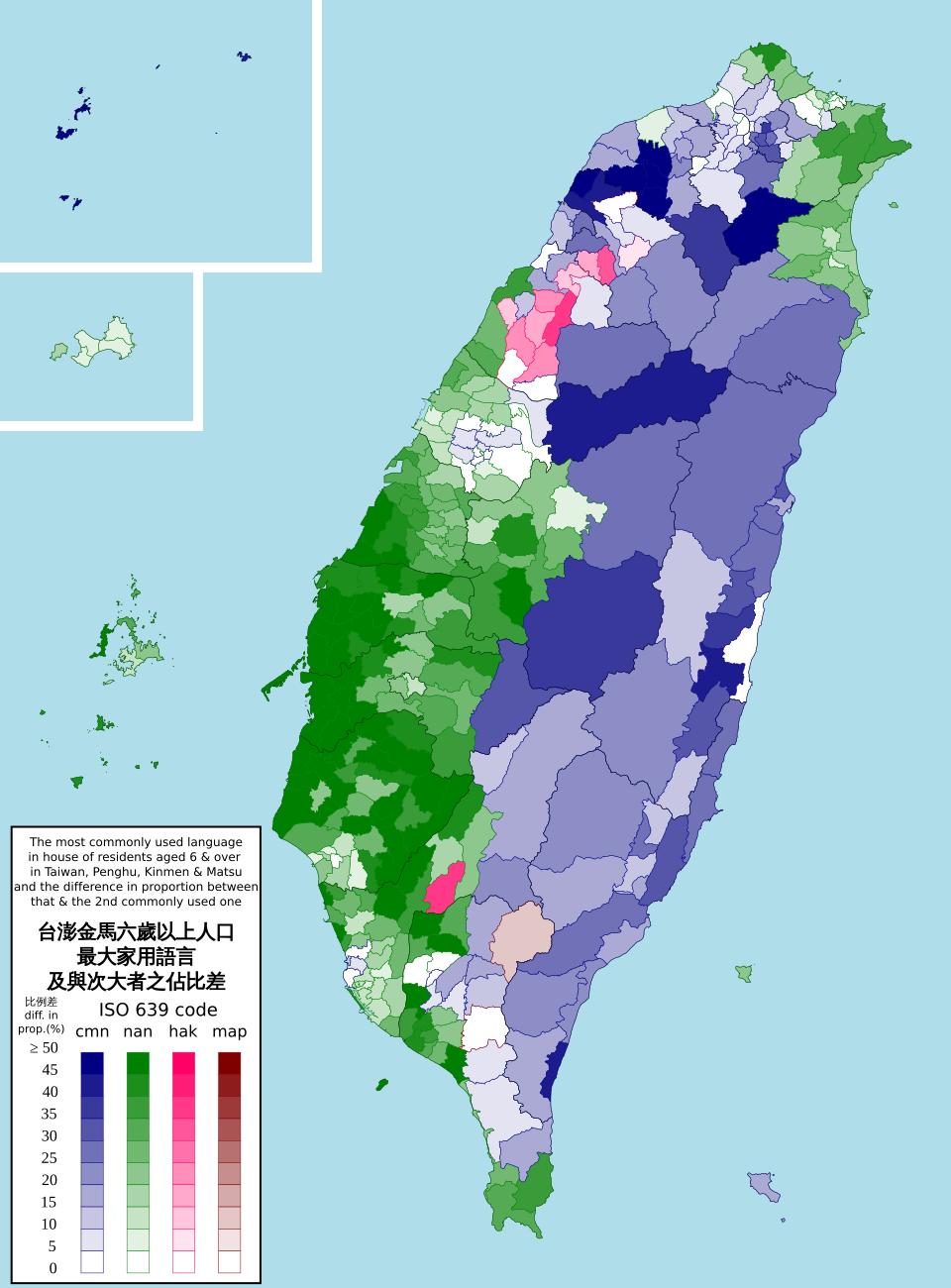
Despite this complexity, the West insists on portraying Taiwan as a separate, unified nation living under threat from another country, China. In the West we are encouraged to forget that Taiwan’s status as part of China remains the premise of every agreement the United States has made with Beijing — affirmed by UN General Assembly Resolution 2758 (1971), “Restoration of the lawful rights of the People’s Republic of China in the United Nations.” The fact that Taiwan is a formally recognised part of China contradicts the narrative of one country bullying another.
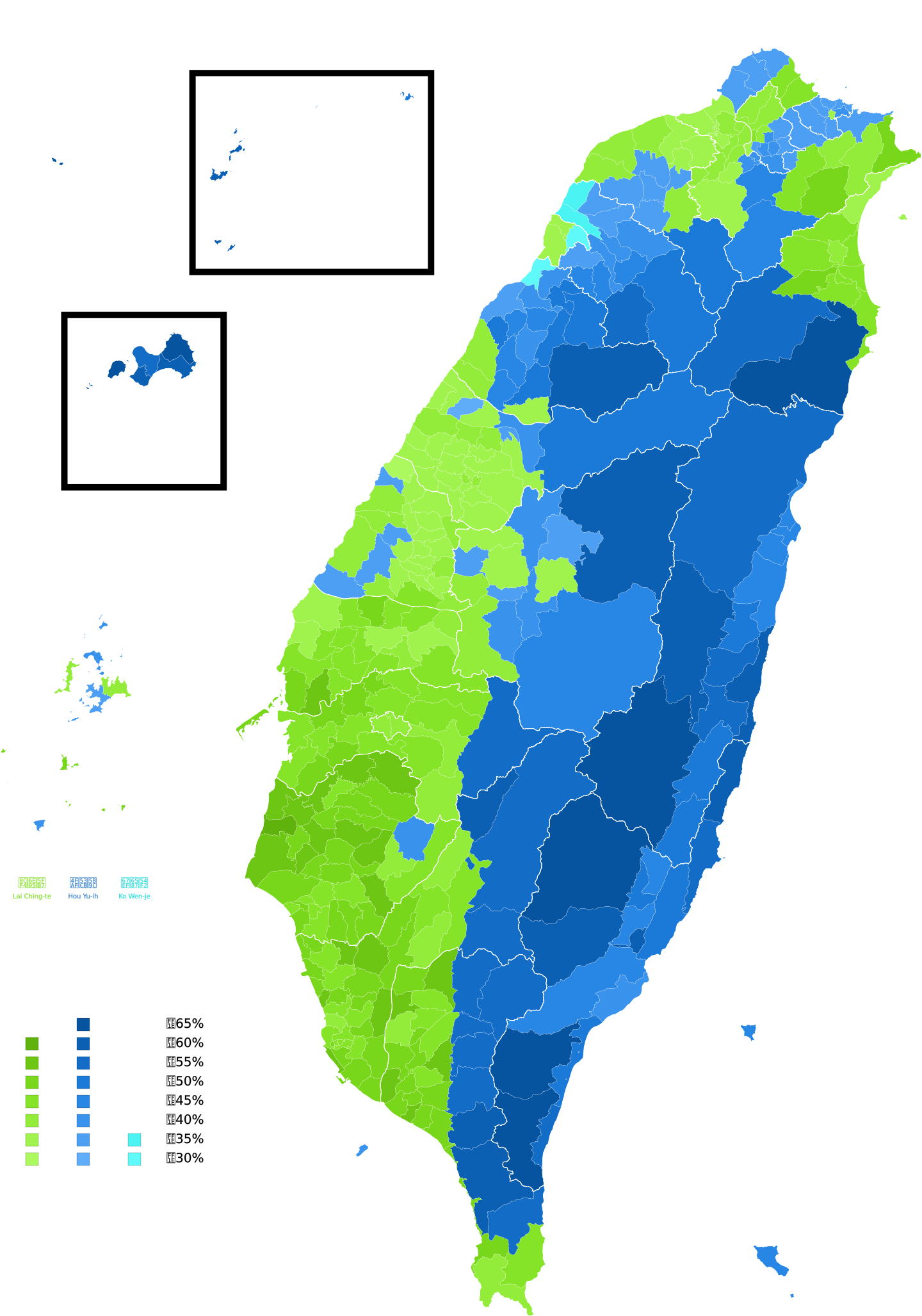
The above map shows Taiwan’s 2024 presidential election results. Blue represents the Kuomintang, who favour engagement with Beijing. Green represents the Democratic Progressive Party, for whom Western ties and self-determination are more important.
Rather than let the island’s people seek compromise and resolve their differences themselves, the United States periodically sends warships into the Taiwan Strait to make its preferences clear. Imagine the uproar if China stationed warships between Hawaii and the US mainland to signal support for the significant minority of Native Hawaiians who favour some form of sovereignty [5].
Axiom 3. If Votes on Self-determination Must Be Promised — They Can Also be Deferred Forever.
Sometimes it is unclear which way a divided people leans. A vote can settle that — but it should be held only if your preferred side will win. If it will not, postpone it, possibly forever.
Vietnam - Making War While Resisting the Inevitable
In 1954 the Geneva Accords ended France’s colonial war with a promise: nationwide elections were to happen in 1956 to reunify Vietnam. The United States refused to sign, believing communist Ho Chi Minh would win. The election was cancelled. President Eisenhower, writing later, expressed a consensus that “possibly 80 per cent” of the population would have voted for Ho Chi Minh [6].
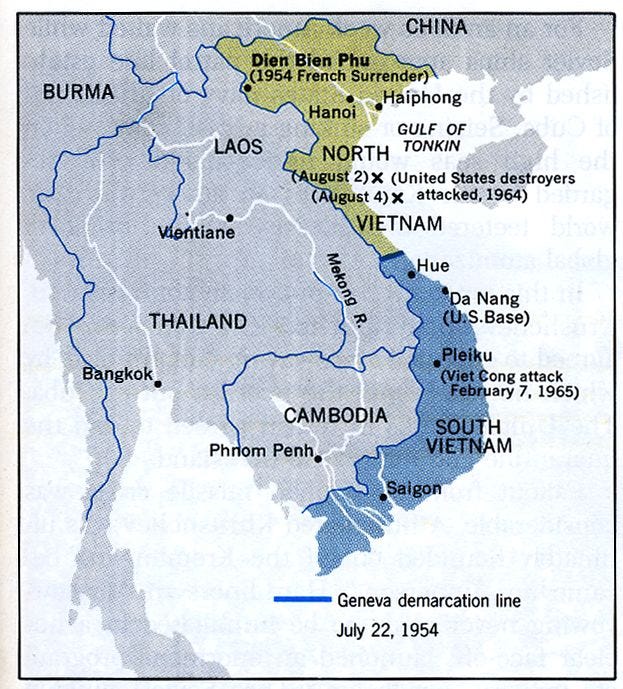
More than a decade of war followed America’s obstruction of the promised vote. Millions were killed but Ho Chi Minh’s side won anyway. With hindsight, the fear of a communist takeover looks misplaced: the country that emerged after the defeat of the USA became a peaceful, middle-income nation and, ironically, a popular destination for American tourists. (See also Saigon 1963: Monsters in Vietnam [Film])
Kashmir, Western Sahara, Palestine
The examples multiply. Kashmir and the Western Sahara have both been promised votes on their destiny for decades; none has taken place. Palestine is the starkest case: the self-determination promised under the League of Nations mandate (1922) was never administered, and the United States has blocked more than fifty Security Council resolutions concerning Palestine [7].
Conclusion
The sponsors of war can take comfort: people have short memories, and arguments based on history — or on anything beyond the current headlines — carry little weight. Furthermore, the media publishing those headlines depend on the sponsorship of corporations with significant defence interests. The system is of course managed by individuals who typically suffer no personal cost from the ravages of war.
See also:
![Taiwan: One Man's Dream, Another Man's Nightmare [Film]](https://substackcdn.com/image/youtube/w_728,c_limit/gnYcSmXXSSg)
References
[1] The changing religious composition of Nigeria: causes and implications of demographic divergence, Cambridge University Press: 28 July 2016
[2] US says it struck Islamic State militants in northwest Nigeria, Reuters 26 December 2025
[3] Ukrainian People’s Republic, Wikipedia retrieved 16 August 2026
[4] Dismissing Russian criticism, U.S. Senator Graham praises Ukrainian resistance, Reuters May 28, 2023
[5] Hawaiian sovereignty movement. Wikipedia retrieved 16 August 2026,
[6] Mandate for Change, Dwight Eisenhower, 1963, p372:
“I am convinced that the French could not win the war because the internal political situation in Vietnam, weak and confused, badly weakened their military position. I have never talked or corresponded with a person knowledgeable in Indochinese affairs who did not agree that had elections been held as of the time of the fighting, possibly 80 per cent of the population would have voted for the Communist Ho Chi Minh as their leader rather than Chief of State Bao Dai. Indeed, the lack of leadership and drive on the part of Bao Dai was a factor in the feeling prevalent among Vietnamese that they had nothing to fight for.”
[7] List of vetoed United Nations Security Council resolutions, Wikipedia, retrieved 17 August 2026