

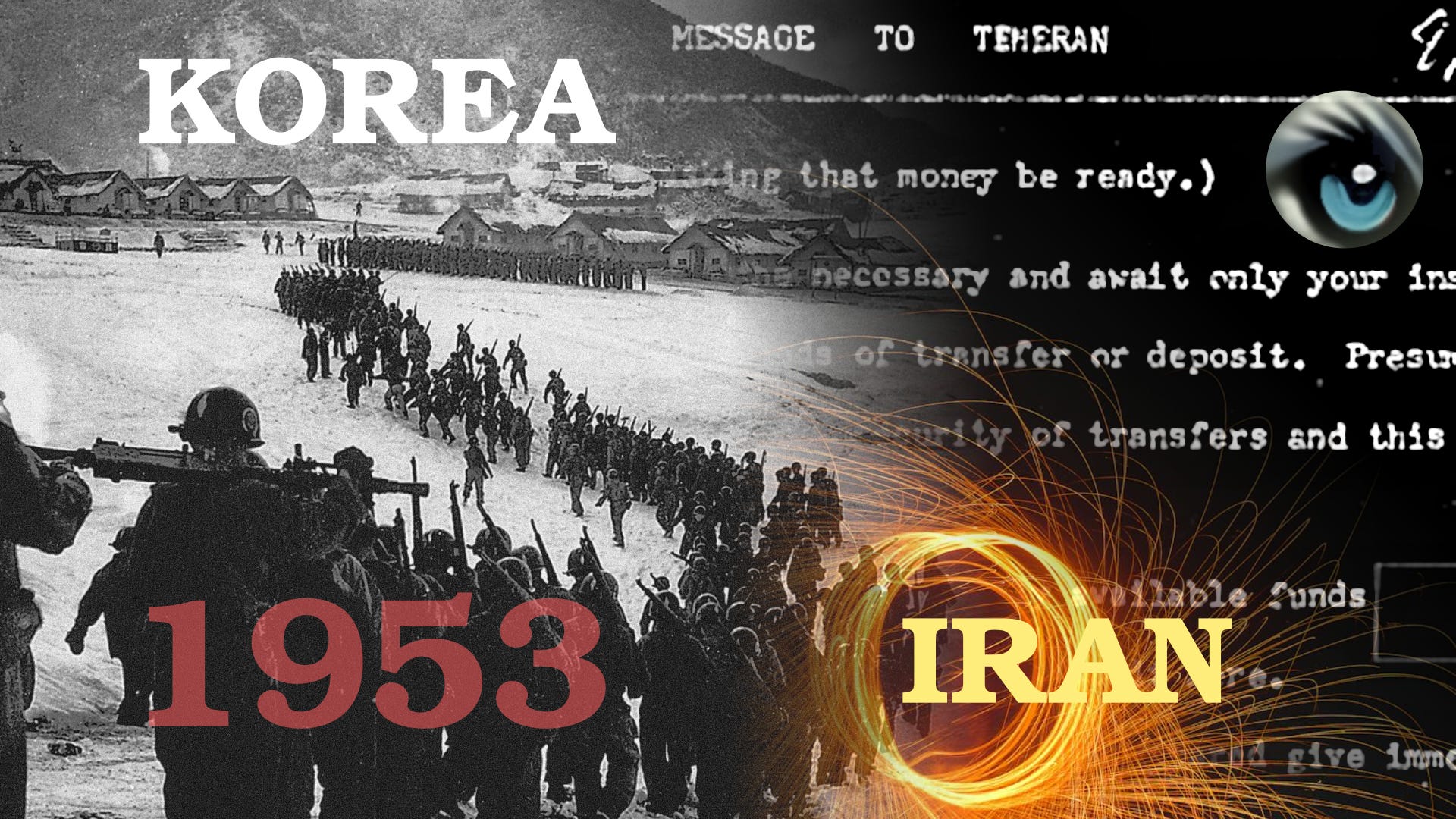
In the summer of 1953, two American conflicts ended - but only one in the way that Washington had hoped.
The Korean War took three years and millions of lives, including those of 36,515 American soldiers. At the end there was no victor, just a frozen battlefield and a country partitioned into North and South - two alienated halves, condemned to mirror each other’s fear forever. What a waste of blood and treasure.
At the same time, another conflict was unfolding in Iran. To the average American it was invisible. It lasted just a few weeks and was waged by the CIA with rumours, bribes, and hired mobs creating chaos in the streets of Tehran. Success came swiftly. The government fell and Prime Minister Mohammad Mossadegh was put on trial. His American‑backed accusers demanded his execution.
For President Eisenhower and his advisers, Secretary of State John Foster Dulles and CIA Director Allen Dulles, the contrast could not have been starker: failure in Korea at a staggering cost; success in Iran for small change.
Kermit Roosevelt Jr., the CIA officer who ran the coup, later wrote that he had been authorised to spend one million dollars - but had used far less. The Korean War, by contrast, cost about thirty billion dollars - that translates to around three hundred million per day in today’s dollars - for three years.
You can imagine the cogs turning in the brains of the Washington elite. Korea was war in the old style - warships, bombers, and more than a million American troops. Iran was led by a handful of men who needed only their guile and a suitcase full of cash. No American deaths. No parades of coffins. No questions asked. And no questions asked meant no story told — except the one Washington chose to tell.
Almost by accident, America had discovered how nations could be subdued cheaply and quietly - without the moral and political liabilities that came with vast expenditure and endless casualty lists. Big wars produced scrutiny; cheap coups did not.
For Washington insiders, the revelation was intoxicating. Here was a new kind of warfare that meant no battlefields, no American body bags, and—most importantly - no accountability.
It was the political equivalent of splitting the atom: power, without accountability.
For decades, the American people would be distracted by entertainment and inspiring stories of “freedom and democracy”. Meanwhile America’s rulers could shape the world in their own image - and on the cheap. That was the revelation of 1953.
The discovery changed not only Iran, but the American imagination itself. Less than a year later, in a small Central American country of Guatemala, similar tactics would be used again - carefully refined and improved.
And from that point forward, America no longer needed wars to conquer. It only needed to tell stories.