

At the age of 23, John F. Kennedy published his Harvard thesis under the title Why England Slept (1940). It sold well enough to buy him a Buick convertible, but more importantly, it offers an early insight into the cast of mind that would later define his presidency.
In his book, Kennedy examines why Britain was ill-prepared to confront Germany at the outset of World War II. He attributes this, in part, to a “natural feeling of confidence, even of superiority” in the English man.
Against this, Kennedy argues that foreign threats demand “clearheaded and informed calculation.”
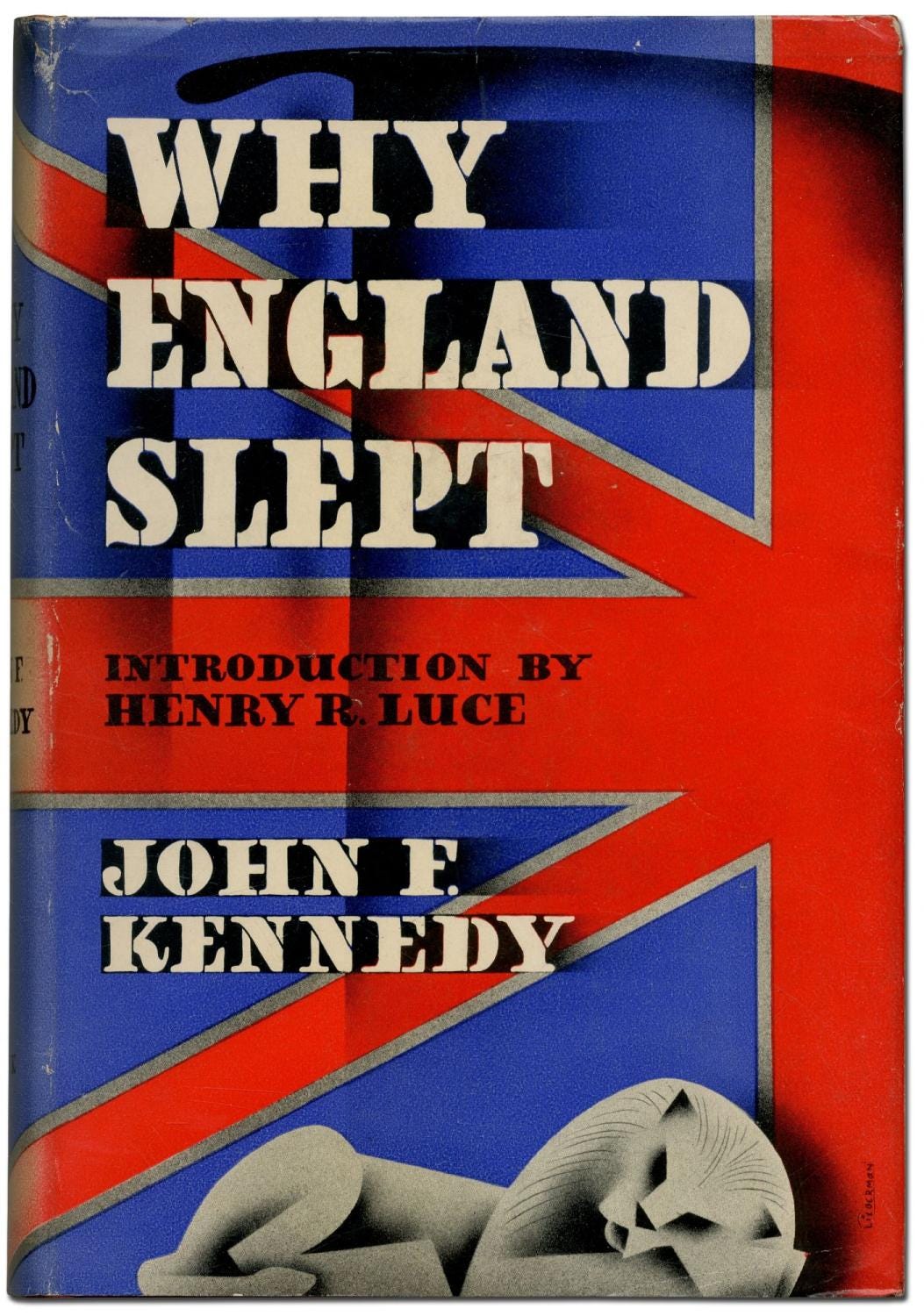
Even at this early stage, we see the outline of the man: sceptical of national arrogance, and committed to cool, rational judgement.
1951 Tour of Asia
As a young Congressman with ambitions for the Senate, Kennedy knew he needed a deeper grasp of foreign affairs. In the autumn of 1951 he embarked on a seven-week study tour of Asia.
A key stop was French Indochina — today’s Vietnam — where French colonial forces were fighting a war against a communist-led independence movement. After visiting Saigon and hearing a range of informed perspectives, Kennedy concluded the French were doomed to lose. More strikingly, he believed the United States would meet the same fate should the attempt to take the place of the French.
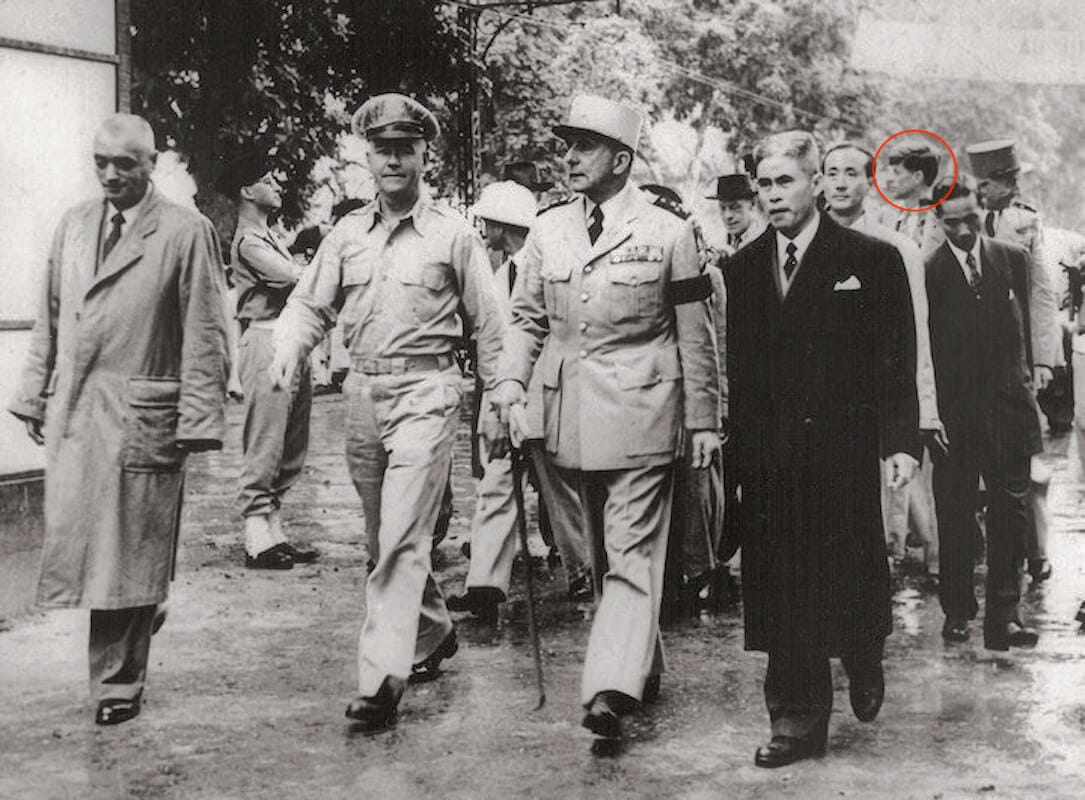
To Kennedy, Vietnam was not an isolated struggle but part of a broader pattern playing out across Asia and Africa: colonial powers were confronting nationalist movements they could no longer contain. It was a conclusion he would never abandon.
A Third Way
For Kennedy, the forces of nationalism and self-determination were too powerful for any empire to suppress indefinitely. This set him apart from much of the foreign policy establishment, which saw European dominance of the Global South as both natural and necessary — above all as a bulwark against China and the Soviet Union.
Kennedy searched for a third way — a path by which newly independent nations might escape colonial rule without being forced into either Western or communist camps.
It was in this context that he formed relationships with leaders such as Diem of Vietnam and Sukarno of Indonesia ― with mixed results. Kennedy had thought that such figures might help nations become independent, stable, and friendly to the United States — without becoming pawns in the Cold War.
1957 Algeria Speech: Kennedy Goes Public
Kennedy’s sympathy for those under colonial rule became unmistakably public in his 1957 Senate speech on Algeria. As in French Indochina, a violent conflict was unfolding between a nationalist independence movement and French colonial powers.
Kennedy broke ranks not just with Washington convention but with America’s NATO obligations, arguing for Algerian self-determination rather than backing France. The New York Times called it “the most comprehensive and outspoken arraignment of Western policy toward Algeria yet presented by an American in public office.”
After a firestorm in the press after the speech and criticisms from his own party, Kennedy worried that he had damaged his career. His father was certain that that the contrary was probably true. Perhaps most importantly, he had demonstrated that he had the courage of his convictions.
An Uneasy Alignment
Despite earlier instincts that challenged imperial thinking, Kennedy’s public position on foreign policy largely aligned with Cold War orthodoxy.
By 1963, France had been expelled from Vietnam, leaving a divided nation at war with itself. In the South, the US-backed Ngo Dinh Diem held power; the North was led by the communist nationalist Ho Chi Minh.
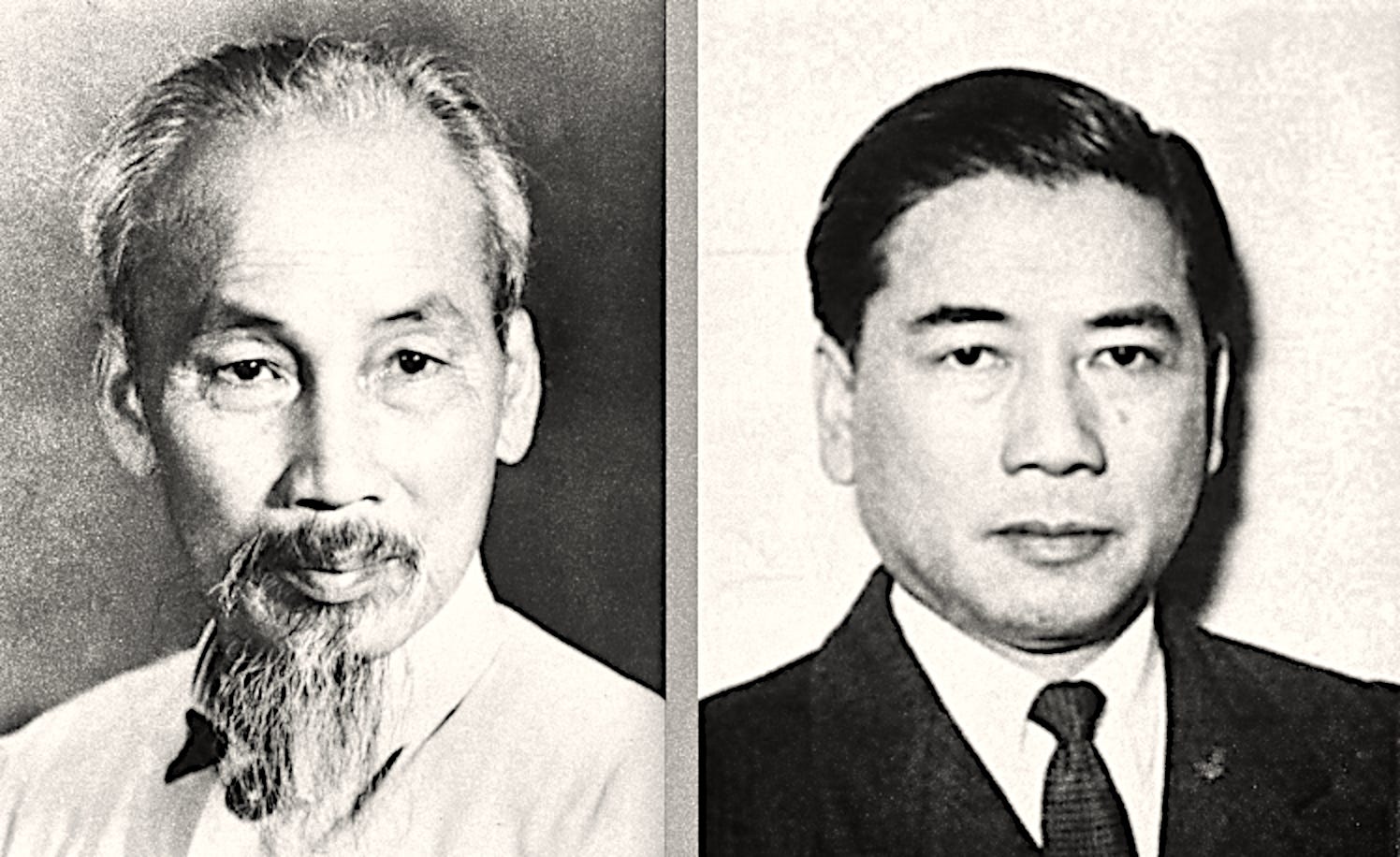
Under Kennedy’s presidency, American involvement deepened — thousands of “military advisers” were deployed to the country, alongside growing calls for greater and more direct military intervention.
Kennedy supported this deepening involvement — at least in public, and at least for a time — but it sat in direct conflict with the convictions he had formed in Saigon in 1951 and the empathy he had shown for the victims of colonisation.
1961 The Bay of Pigs: The Spell Is Broken
At some point early in his presidency, Kennedy reassessed the case for US involvement in Southeast Asia. Central to this shift was his growing belief that he had been misled by his own intelligence services.
In 1961, the CIA backed an invasion of Cuba by anti-Castro exiles at the Bay of Pigs. Kennedy had made clear he would not commit US forces. Yet when the operation faltered, Kennedy came to believe it had been deliberately designed to fail — in an attempt to force his hand towards the full-scale invasion he had explicitly ruled out.
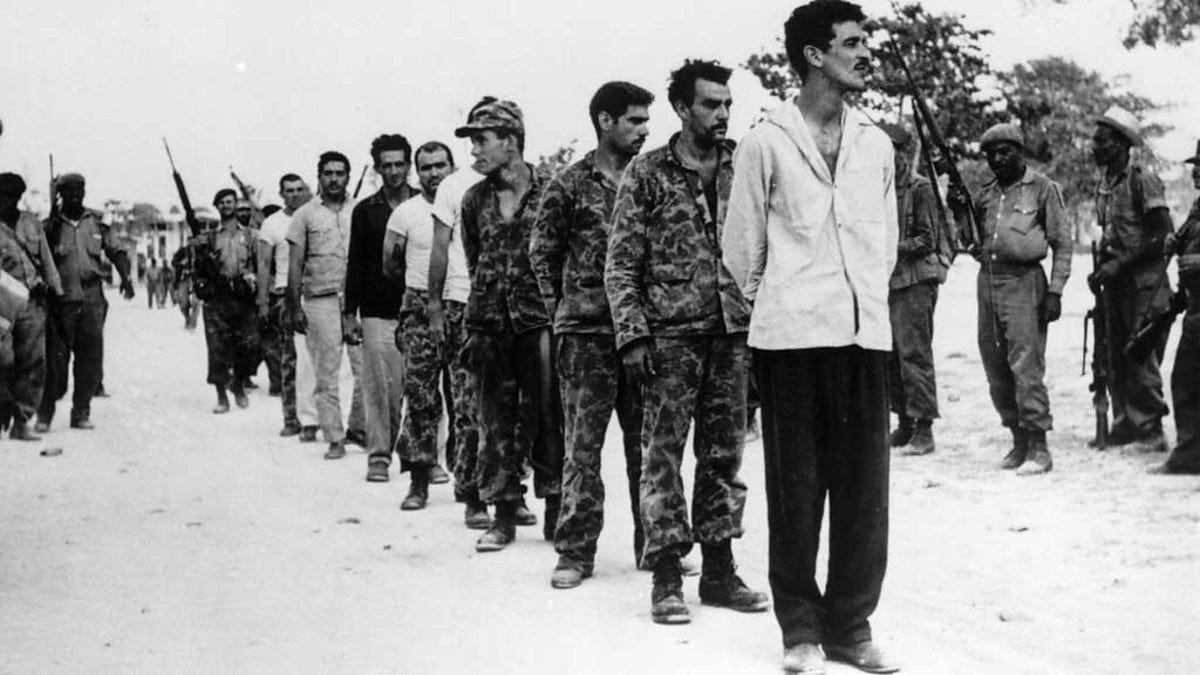
Kennedy chose humiliation over escalation. In the aftermath, he developed a deep distrust of both military and intelligence advice, reportedly vowing to “smash the CIA into a thousand pieces and scatter it to the wind.”
From this point on, when assured that victory in Vietnam was achievable, Kennedy could no longer suspend his disbelief. Publicly, he maintained support for the war — aware of the political cost of appearing weak. Privately he began to plan for withdrawal.
1963 Honolulu: Building the Plan for Withdrawal
On May 6, 1963, Secretary of Defense Robert McNamara chaired a military conference in Honolulu, where he directed US commanders to develop concrete plans for a full withdrawal from Vietnam.
The military leadership was unenthusiastic, even resistant to this change in direction. McNamara was acting on Kennedy’s policy, pushing against the institutional momentum towards escalation.
McNamara–Taylor Report: Justifying the Plan
In September 1963, Kennedy dispatched McNamara and General Maxwell Taylor on a ten-day “fact-finding” mission to South Vietnam.
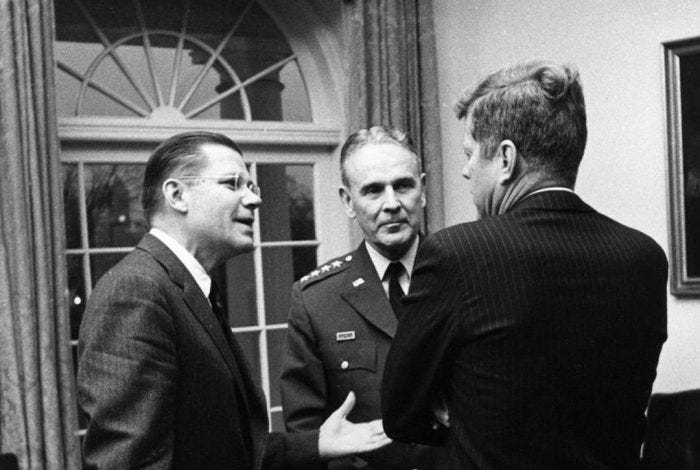
The resulting McNamara–Taylor Report was supposedly drafted on the flight home, though much of it had been prepared in advance in Washington. Kennedy had decided on withdrawal months earlier; the mission’s purpose was to provide a formal rationale for the decision already taken.
NSAM 263: The Decision in Writing
On 11 October 1963, just days after receiving the McNamara–Taylor Report, Kennedy signed National Security Action Memorandum 263. It set out, in clear terms, his intention to begin withdrawing US personnel from Vietnam.
Six weeks later, Kennedy was dead.
The Old Order is Restored
The day after Kennedy’s funeral, his successor, President Lyndon Baines Johnson, signed NSAM 273 overriding Kennedy’s earlier directive. The document was being drafted while Kennedy’s body was lying in state, not yet buried.
While the language of Johnson’s new directive suggested continuity, in substance it emphasised continued military engagement — effectively cancelling Kennedy’s earlier move toward withdrawal.
Five days after the assassination, Johnson, in his televised “Let us continue” speech, urged the nation to “continue” its commitments in Vietnam, leading the American people to think that escalation under the Johnson presidency would be a continuation of Kennedy’s policy. It was in fact, the opposite.
Who Pulled the Trigger?
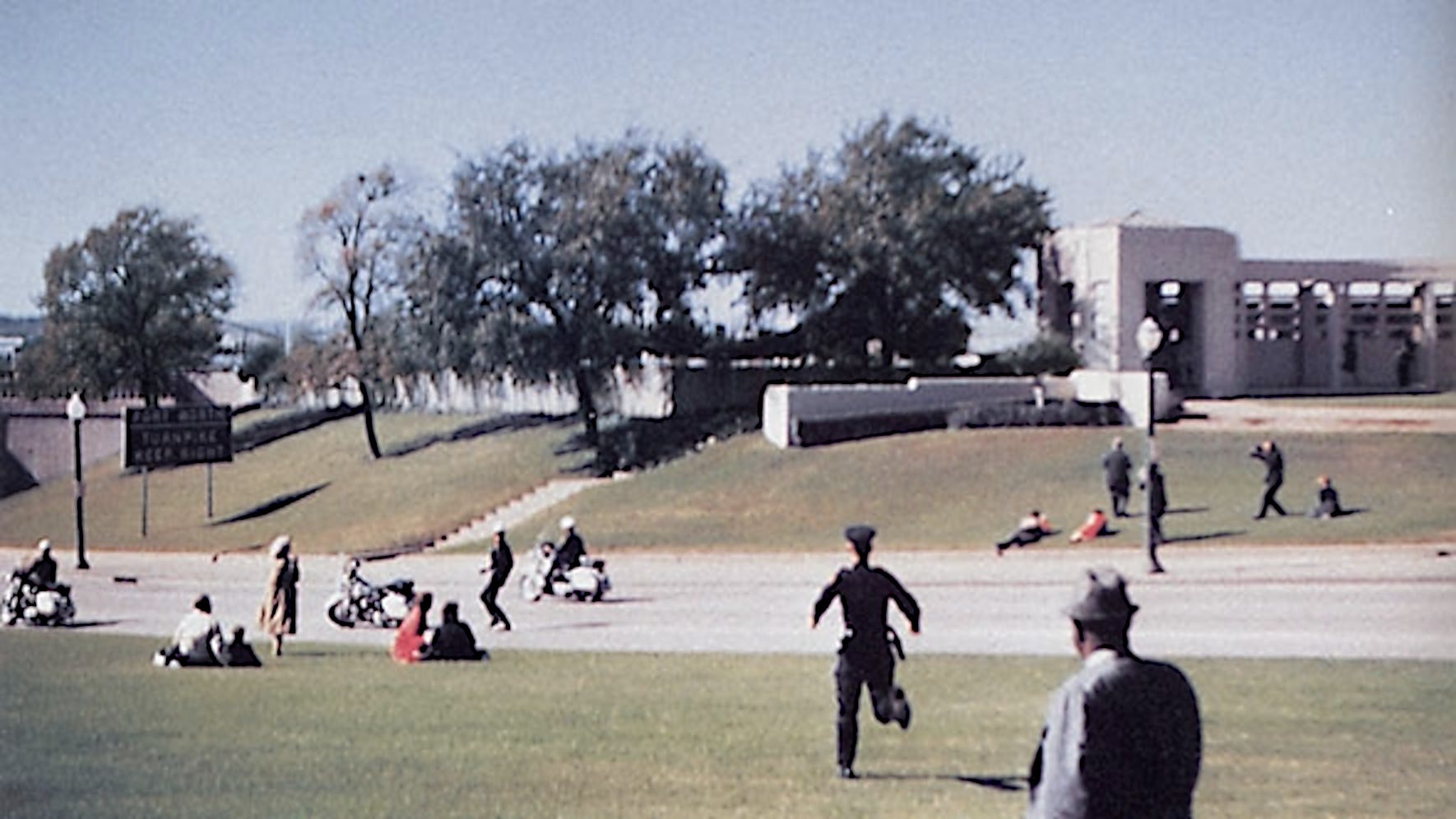
The precise mechanics of the Kennedy assassination remain obscure. We do not know how many assassins were involved, where they were located or their subsequent fates. No definitive account has ever commanded universal acceptance.
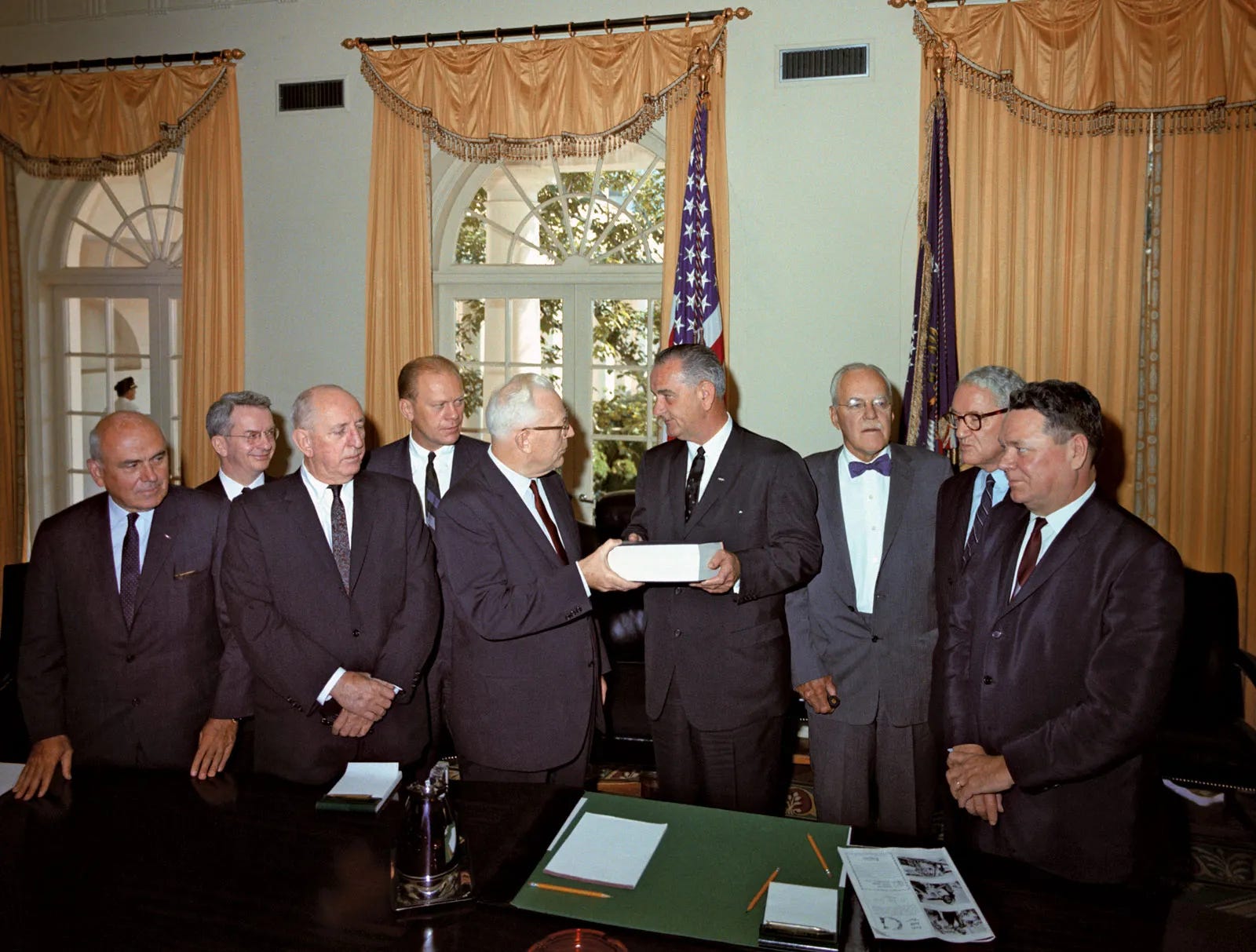
The Warren Commission, established by Johnson, concluded that Lee Harvey Oswald acted alone. Yet the report has been widely challenged. Critics have pointed to a troubling misalignment between the nine volumes of evidence collected and the conclusions drawn from them; its failure to establish a credible motive; and its reliance on the highly contested interpretations of evidence such as the “magic-bullet theory.”
The process itself has also drawn scrutiny. The inclusion of Allen Dulles — recently dismissed as Director of the Central Intelligence Agency by Kennedy following the Bay of Pigs fiasco — raised questions about independence, while later investigations, including the 1979 United States House Select Committee on Assassinations, fundamentally contradicted the Warren Commission, concluding that the assassination was likely the result of a conspiracy.
The sequence of events only deepened the uncertainty. Oswald was killed while in police custody by Jack Ruby before he could stand trial, and key questions—around both Ruby’s actions and the killing of Officer J. D. Tippit, also killed that day — remained unresolved.
What emerges is not a settled account, but an absence of one.
Conspiracy Hypotheses
More than sixty years later, competing theories about the assassination persist. These range from Cuban exiles angered by the botched Bay of Pigs, to Texan oil interests opposed to tax changes, to foreign actors such as Israel, reportedly at odds with Kennedy over nuclear policy.
Around these theories swirl conflicting arguments, some well-evidenced, others merely compelling, none conclusive. Remarkably, genuine efforts to establish the truth continue to compete with an apparently deliberate production of professional disinformation.
There are multiple plausible explanations, but they cannot all be true, and none of them is proven.
The Investigation and the Problem of Control
Despite all the doubt and confusion, one issue stands above the rest: the conduct of the investigation itself. Many groups may have had motive and means. Some may have played a role. Others may even have been incentivised to muddy the waters. However, only the US government had the authority to control the investigation and shape the official narrative.
The Warren Commission was largely controlled and overseen by former CIA director Allen Dulles who was the only member of the commission to attend every hearing. Kennedy felt he had been deceived by Dulles over the Bay of Pigs and had fired him. This raised an unavoidable question: could an investigation controlled by a controversial figure drawn from the very institutions under scrutiny be considered independent?
In Conclusion
John F. Kennedy was a serious thinker from a young age, evident in his 1940 book Why England Slept. His divergence from prevailing orthodoxy on colonialism and empire emerged during his 1951 tour of Asia, and became public in his 1957 Senate speech on Algeria. His disillusionment with the military and intelligence establishment deepened after the 1961 Bay of Pigs Invasion. By May 1963, plans for US withdrawal from Vietnam were being formalised at the Honolulu conference chaired by Robert McNamara. In October, he signed NSAM 263 confirming that intent. A month later, he was dead.
Kennedy’s instinctive sympathy for the colonised placed him increasingly at odds with the strategic logic of American power. The assassination not only stopped him dead, but its dramatic public nature served as a deterrent for anyone else who might follow.
We do not know for sure who, if anyone, was on the grassy knoll nor who fired shots at the president that day. But one thing is clear: to the architects of empire, a president with Kennedy’s convictions was like a crucifix to a vampire.
See also: