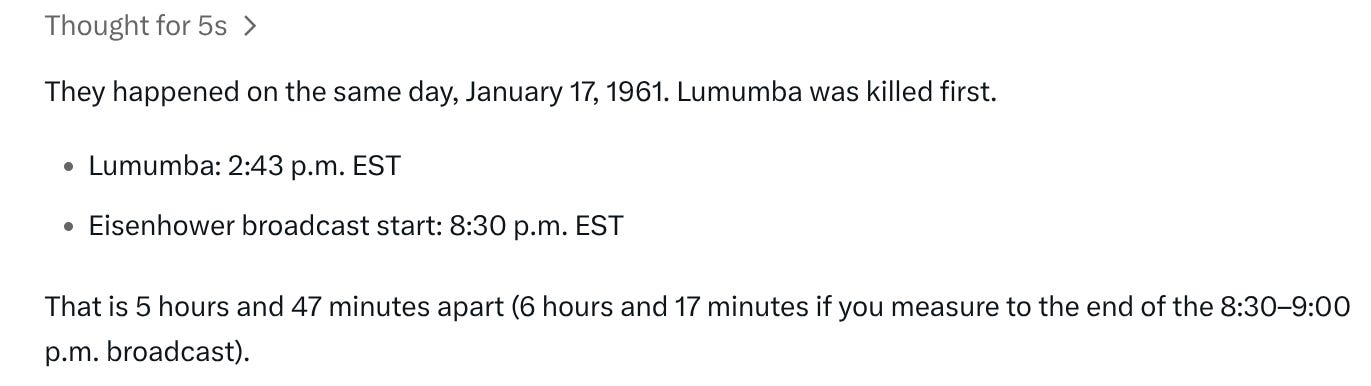
Dwight D. Eisenhower, US president from 1953 to 1961, is remembered mostly in a positive light — the grandfatherly architect of post-war prosperity. In most published rankings of the presidents, he sits comfortably in the top ten. That wholesome reputation needs to be reconciled with one documented moment: Eisenhower ordering the killing of another man.
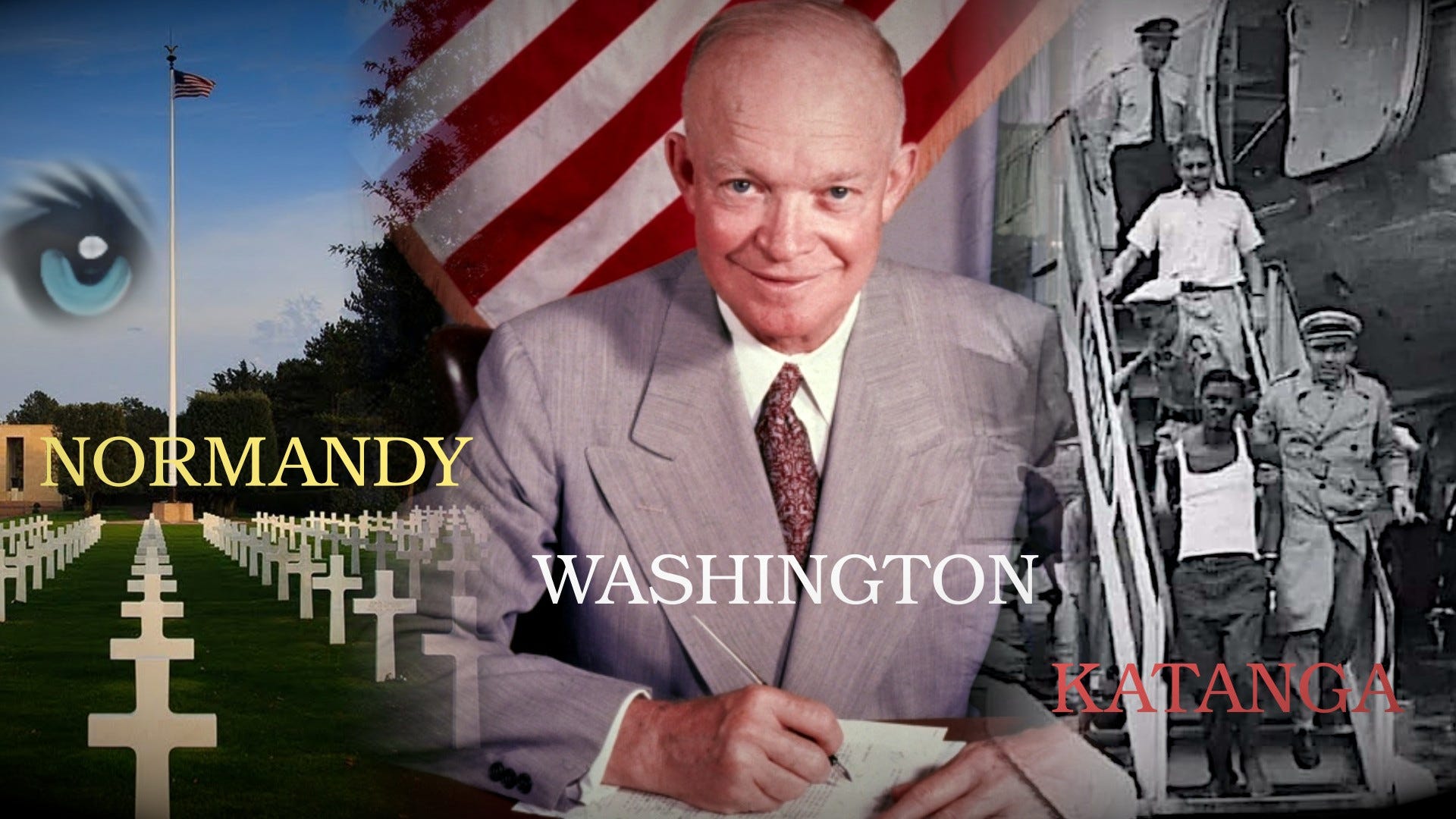
It was August 18th 1960, at a meeting of the National Security Council. In a memorandum from that day, Staff Secretary Robert Johnson, the official minute taker, recalled Eisenhower turning to CIA Director Allen Dulles — “in the full hearing of all those in attendance” — and saying that Patrice Lumumba should be “eliminated.”

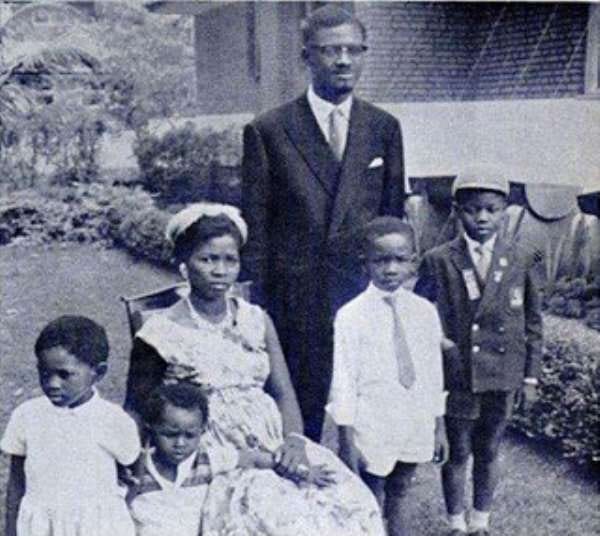
Five months later, Lumumba, former Prime Minister of the Congo, wrote a farewell letter to his wife and five children before being tortured and killed, with the knowledge and complicity of both Washington and Brussels.
How do we reconcile Eisenhower’s stature with his willingness to deprive a wife of her husband and children of their father? This is not, in the end, simply about Eisenhower — many others would have stood in his shoes given the chance. It is about a society that holds a man capable of this in such high esteem.
From Normandy to the Oval Office
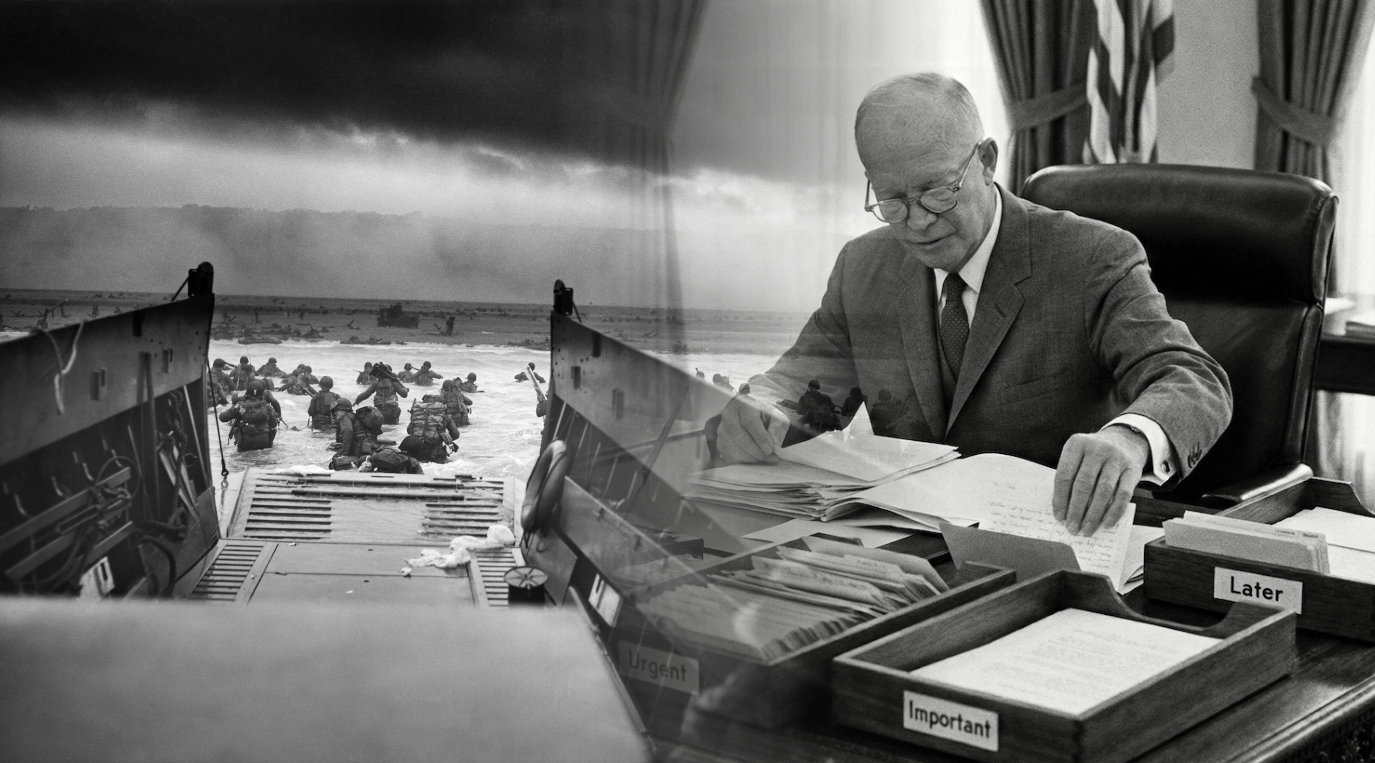
Perhaps at the heart of the issue is a fundamental incompatibility — between the mindset required to command a war machine and the values necessary for civilian leadership. Eisenhower’s career was defined by the industrial-scale disposal of lives in the meat-grinder of Second World War Europe. When you appoint such a man as president, you inevitably import his cold calculus into the Oval Office.
Military command demands secrecy. Plans cannot be shared with a citizenry, decisions cannot be exposed to public scrutiny. For Eisenhower, conducting affairs of state beyond the reach of public accountability would have felt not just necessary but natural.
It also normalises violence as a problem-solving tool. Secrecy and violence, the twin instruments of war, travelled with Eisenhower into peacetime. He deployed clandestine operations to overthrow Arbenz in Guatemala and Mossadegh in Iran — democratically elected leaders removed in the name of the very democracy the US claimed to support and had fought to defend.
And then there is democracy itself. Dissent is not a threat to democracy — it is a symptom of it functioning. A military commander cannot afford to tolerate it. Eisenhower, it seems, never unlearned that lesson. It was during his tenure that the CIA transformed from an intelligence-gathering body into a unaccountable paramilitary tool for control.
For the man who had commanded the liberation of Europe, the irony appears to have been lost on him entirely.
A Price Worth Paying - Especially if Others Are Paying it
Lumumba is an early example of a leader removed with lethal force because his vision appeared to some to run counter to US interests. He was committed to liberating the Congo from the legacy of savage Belgian colonisation — but Washington feared he would enable Soviet influence in Africa.
Tragically, Lumumba had only turned to Moscow after the US had rejected his requests for help in stabilising a new democracy. He had asked America first. They refused to help with independence, not wanting a Congo they couldn’t control.
In the short term, the US got what it believed it wanted. Lumumba was replaced by Mobutu — a corrupt and murderous dictator, but one reliably aligned with Washington’s interests. The people of the Congo would suffer decades of repression. From Washington’s point of view, this was a price worth paying — and they weren’t paying it anyway
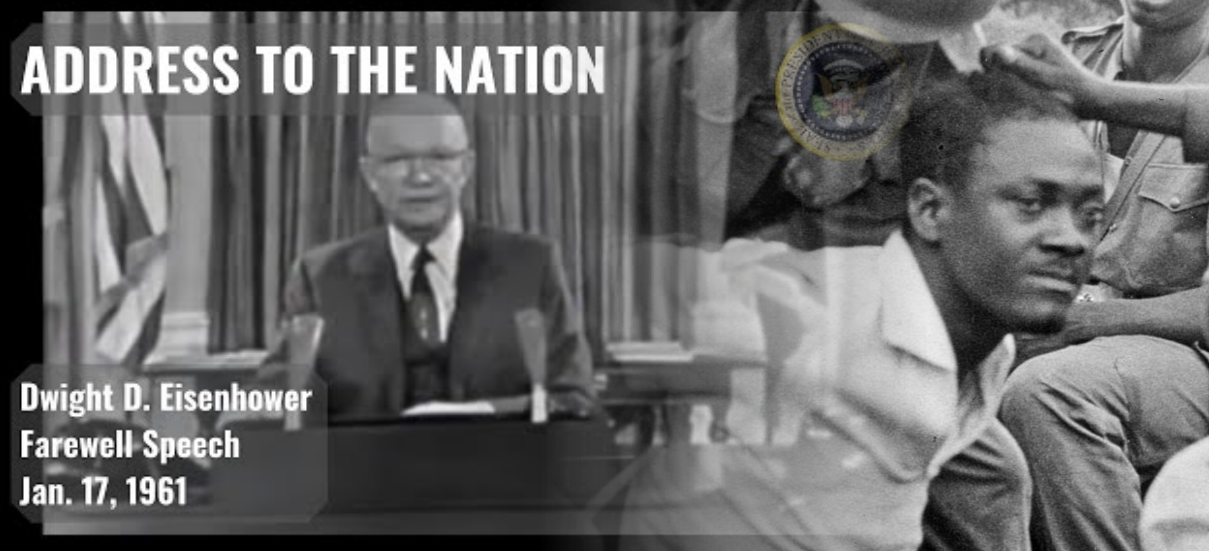
On January 17th 1961, Eisenhower delivered his farewell address to the nation. In it, he issued a grave warning about the threat posed by what he called the “military-industrial complex” — a machinery of power that only an “alert and knowledgeable citizenry” would be able to resist. What Eisenhower did not mention, as he spoke those words, was that Patrice Lumumba had been killed around six hours earlier, somewhere in remote Central Africa. The man who had ordered his elimination was on television warning America about the very machinery he had just used. As Eisenhower spoke to the TV cameras, Lumumba’s blood was still soaking into the ground. [1]
A Precedent Had Been Set
Perhaps the most consequential outcome was not Mobutu, but the precedent. The assassination of a country’s leader had become an accepted instrument of policy — something that could be ordered in a National Security Council meeting, to be taken care of by machinery that, once built, would never dismantle itself.
In Dealey Plaza, November 1963, John F. Kennedy’s presidency was brought to a brutal and sudden end. The threads connecting that moment to Eisenhower’s order to eliminate Lumumba are subtle and indirect — but they are there. A culture of lethal intent towards inconvenient leaders had taken root in Washington. Eisenhower had given it presidential legitimacy. Three years later, Kennedy was consumed by it.
More than sixty years later, it is worth asking not whether this anti-democratic tolerance for secrecy and violence could reappear — but whether it ever stopped.
[1] Office of the Historian: https://history.state.gov/historicaldocuments/frus1964-68v23/d11
[1] According to Grok: