

Napoleon is supposed to have said that history is “a set of lies agreed upon.” What lies? Agreed upon by whom? And for what purpose?
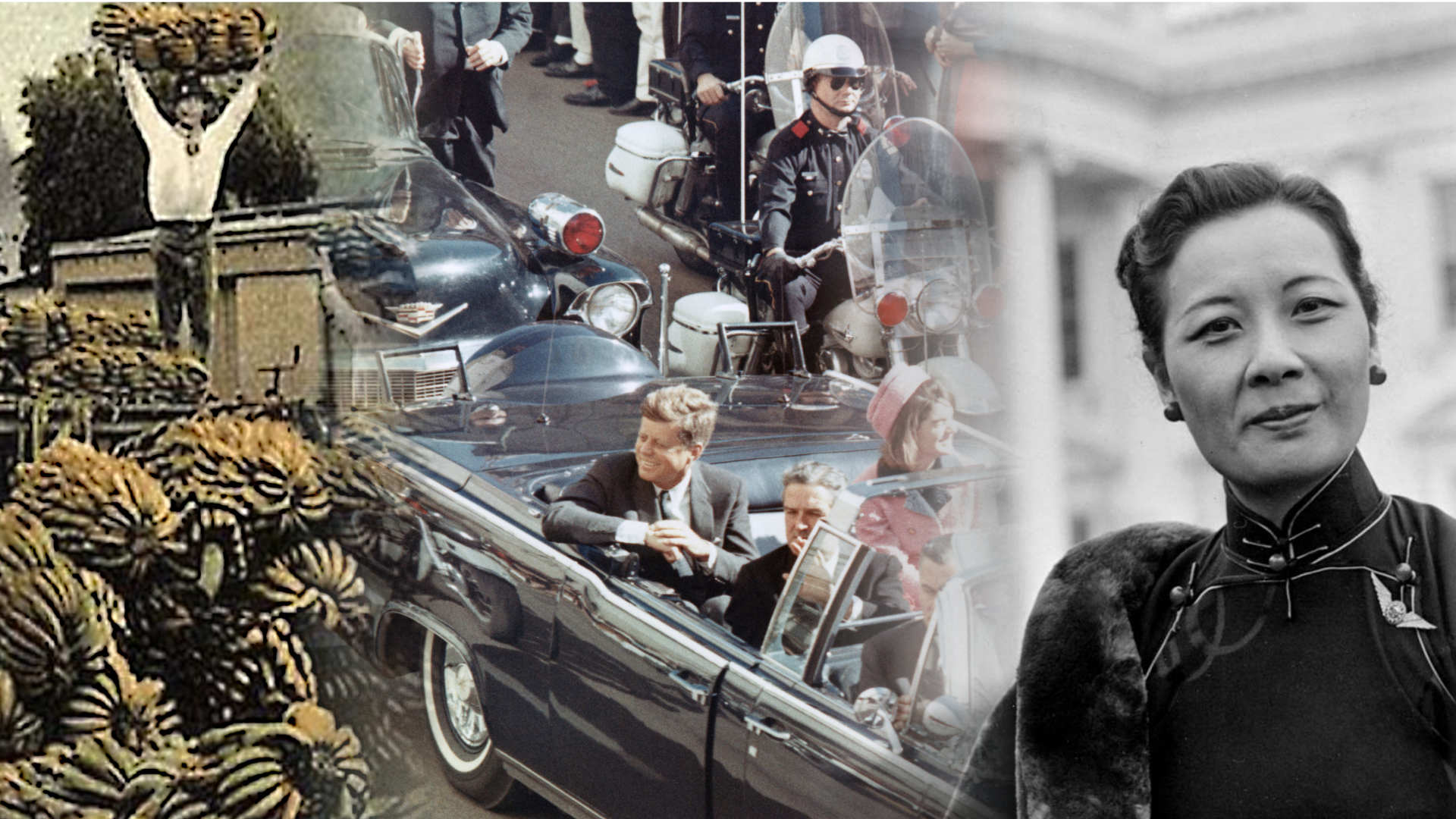
Some years ago — for reasons I’ll explain another time — I set about researching the story of President John F. Kennedy: his life and his violent demise. I discovered, perhaps unsurprisingly, that many lies had been told. When you find that important falsehoods have been deliberately spread, you are forced to ask: why? By whom? To what end?
I even conducted a small piece of original research into the JFK story. It was a simple experiment, but the results surprised me. Nearly half a century after the assassination, the tentacles of corruption were still there, pushing and pulling at the edges of the story — and even reaching towards me! That was unexpected. It taught me something about how power operates.
The Kennedy story does not stand in isolation. It emerged from a labyrinth of precedents and produced consequences that reach deep even into the present day. Its significance is difficult to overstate. JFK’s fate was not a one-off, not a strange rupture in an otherwise stable order. It was a moment in a much longer and larger struggle.
The struggle is ongoing and concerns something hard to define. “Evil” may be the simplest word for it — a force that is always there, organised, adaptive, and skilled at disguise.
I am far from the first to travel down these sometimes dark and winding lanes. Many serious scholars have done stellar work mapping the territory I cover only superficially. The best of them have no rivals — certainly not me. But sometimes the overall arc can get buried under the immense detail that scholarship demands.
My aim with HistoryInBites is to lay down some basic signposts — pointers to the shape of a vast story, one that spans the globe and at least half a century. It has shaped the world we live in whether we realise it or not. My goal is to illuminate something of this larger pattern without getting lost in the weeds.
Some of this material is uncomfortable and it is tempting to look away. But a life lived with blinkers on is not a full life. Asking questions often leads to more questions rather than answers — but the process, I believe, is both enlightening and enriching. With understanding comes the possibility for change.
The story arc that I trace really begins in 1954 with America’s United Fruit Company and the bananas it took from Guatemala. Yet there is a prelude that sets the stage so perfectly it feels almost scripted rather than the normal mess of history.
So we begin one step earlier: Iran, 1953.
That year, a 37-year-old CIA officer named Kermit Roosevelt spent the summer in Tehran, operating out of the U.S. Embassy with little more than cake tins stuffed with cash and a network of rent-a-mob agitators. Within weeks, he had brought down the elected government of Mohammad Mossadegh. and changed the course of history for Iran - and for the world.
As I write this in February 2026, the United States once again stands poised to attack Iran. Aircraft carriers, submarines, and the full weight of its military machine are assembling within striking distance of this ancient civilisation.
All decent people must hope for a benign outcome to what has long been a perilous situation. But to understand the present, we must understand the past that flows into it. This is both common sense and yet a principle routinely ignored.
Similarly, we are often told that those who fail to learn from history are condemned to repeat its mistakes. But what if they were not mistakes at all? What then?
Join me on a journey to find out. We begin in Iran, 1953 — with Kermit and Mohammad.